Watch Guides
How to Set a Chronograph Watch: Start, Stop, Reset
Learn what the hands and pushers do on a chronograph watch, how to set the time, and how to use the stopwatch without guessing.
Back to Watch Guides →
A chronograph can look busy at first: three subdials, a crown, two pushers, and a large seconds hand that appears to be doing nothing. The good news is that most everyday chronographs are simple once you separate their two jobs. The crown sets the watch. The pushers operate a stopwatch. Learn which hand belongs to which job, and the dial becomes useful instead of mysterious.
The Short Answer
To set a chronograph watch, use the crown to set the ordinary time and date, following the instructions for that movement. Then make sure the stopwatch hands are resting at zero. On a standard two-pusher chronograph, press the upper pusher to start and stop timing. Once stopped, press the lower pusher to reset the stopwatch hands to zero. Do not press reset while the timer is running unless the watch is specifically made as a flyback chronograph.
That familiar top-pusher, bottom-pusher pattern is common, but it is not a license to assume every dial works the same way. The Hamilton chronograph guide and TUDOR’s chronograph tutorial both make the same sensible point: identify your own watch’s controls before you operate them. That matters most when a watch has screw-down pushers, a date, or an unusual layout.
First, Separate the Timekeeper From the Stopwatch
A chronograph is an ordinary watch with a separate timing mechanism added to it. The hour and minute hands keep the current time whether the stopwatch is running or not. In many designs, the small seconds hand on one of the subdials quietly confirms that the watch is alive. The long center hand, which many people expect to sweep once a second, often belongs to the stopwatch instead. It waits at 12 until you tell it to start.
The other subdials may count elapsed minutes, elapsed hours, tenths of a second, or show a 24-hour indicator. Their locations are not universal. A three-eye dial may look similar to another three-eye dial while assigning a different job to each register. Before timing anything, spend one quiet minute looking at the labels, the hand positions, and the product instructions. That is quicker than trying to decode a running timer after the fact.
The standard chronograph instructions from Watch Station illustrate the conventional arrangement: pusher A starts and stops the central stopwatch seconds hand, while pusher B returns the timing hands to zero after they have been stopped. Your exact model may add different counters, but this is the basic language of a conventional chronograph.
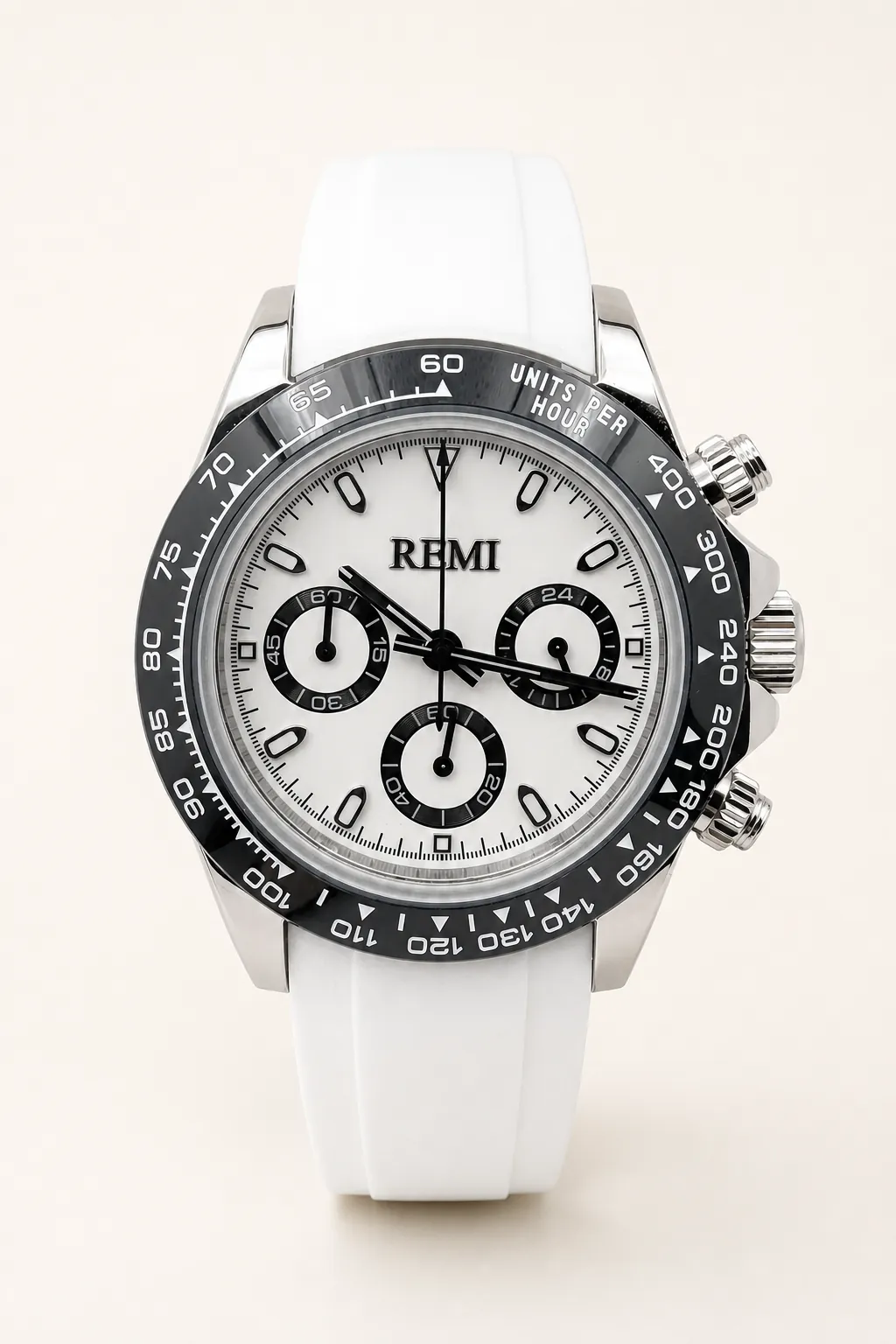
1. Set the Ordinary Time With the Crown
Start with the chronograph stopped and reset. Then use the crown, not the pushers, to set the current time. A typical pull-out crown has a normal position against the case, a first click for a quick-set date, and a second click for the time. Some watches omit the date position. Others have a screw-down crown that must be released before it can be pulled out. Treat the crown positions as model-specific, because this is the part of the routine where guessing can cause trouble.
If your watch has a date, avoid quick-setting it during the period when its calendar mechanism may be changing over. The safe hours vary by movement. A cautious approach is to move the hands to a daytime hour before changing the date, then set the correct time. If you are unsure whether the dial currently shows morning or evening, advance the hands through 12 and watch for the date change. That tells you where the movement is in its daily cycle.
Once the time is correct, push the crown fully back against the case. If it screws down, engage the threads gently and turn without forcing them. A crown that feels crooked or gritty deserves a pause, not more pressure. The chronograph pushers should remain untouched while you are setting the normal time unless the model manual says otherwise.
2. Confirm the Timing Hands Are at Zero
Before you use the stopwatch, check the long center timing hand and any minute or hour totalizer. On a conventional chronograph, they should point to their zero marks after a reset. If the center hand is resting elsewhere, first make sure the timer is stopped, then press the lower pusher once. A clean return to zero tells you the stopwatch is ready for the next interval.
It is easy to mistake a stopped stopwatch for a broken watch. A large hand parked at 12 is normal. A large hand parked elsewhere usually means somebody stopped a timing session and did not reset it. The actual running seconds may be ticking away in a smaller subdial. This small distinction saves a lot of unnecessary worry, especially with quartz chronographs where the large center hand is deliberately still most of the day.
If a reset sends the hands close to, but not exactly to, zero, do not keep pressing the pusher in hopes that it will improve. Some quartz movements have a hand-alignment procedure, often involving the crown and one or both pushers. The sequence is movement-specific. Check the manual or ask a watchmaker rather than experimenting, because the same buttons can perform very different functions on different calibers.
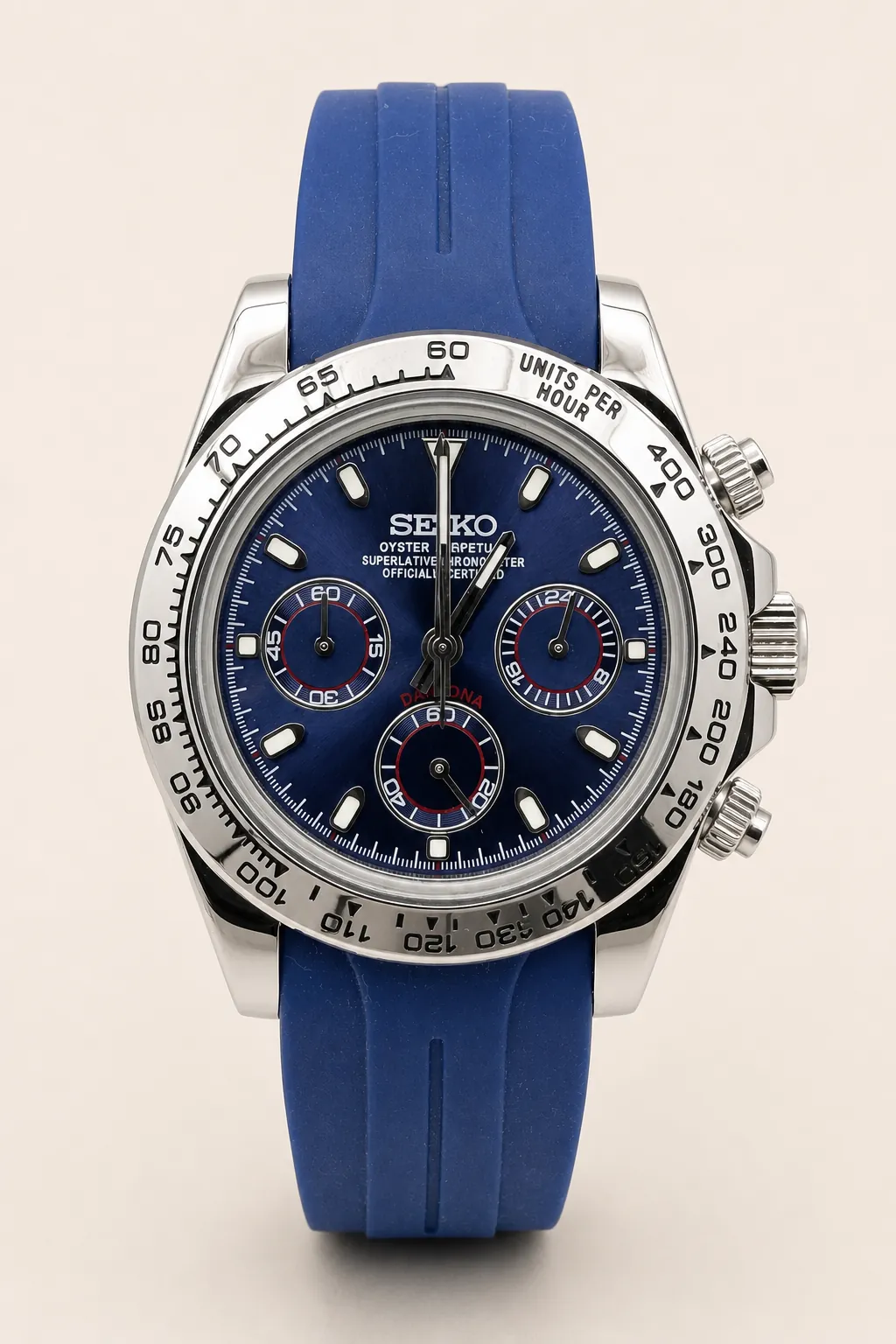
3. Start, Stop, Read, Then Reset
A standard chronograph is built around a simple sequence. Press the upper pusher once when the event begins. The center stopwatch hand starts moving. Press the same pusher again when the event ends. The hand stops, and the elapsed time is held on the dial so you can read it. Then, and only then, press the lower pusher to return the stopwatch hands to zero.
- Start. Press the upper pusher once at the beginning of the interval. Watch the long center timing hand begin to move.
- Stop. Press the upper pusher again when the interval ends. The timing display pauses while the watch continues keeping ordinary time.
- Read. Read elapsed seconds from the center hand, then check the minute or hour counters if your timing session ran longer than one minute.
- Reset. With the timer stopped, press the lower pusher to return the stopwatch hands to their zero positions.
That sequence works for timing a commute, a workout interval, a meeting break, or the time it takes to make coffee. You do not need a racetrack to enjoy the function. The useful part is not the drama of the extra pushers. It is being able to measure a real slice of time without reaching for a phone.
Some chronographs let you stop and restart the timer with the upper pusher, adding the next interval to the one already recorded. That is useful when you want accumulated time rather than a fresh reading. Reset only when you are done with the total. A flyback chronograph is different: it can reset and begin a new interval while the timer is running. Unless the watch is explicitly identified as flyback, use the normal sequence and keep the reset pusher for a stopped timer.
4. Read the Subdials Without Making Assumptions
Subdials have distinct jobs. One might record elapsed minutes while another displays normal running seconds. A third may be an hour counter, a 24-hour indicator, or a fraction-of-a-second display that only becomes active after you stop timing. The labels and hand movement reveal more than the dial’s visual symmetry does.
Try a short test. Reset the chronograph, start it, and let it run for one minute. Watch which small hand moves as the large hand completes a circuit. Stop it, then reset it. This tells you which register is linked to the stopwatch without forcing you to rely on a diagram from another model. Keep the test gentle and ordinary. You are learning the watch, not stress-testing it.
A tachymeter scale deserves the same restraint. The numbers around some dials or bezels can convert the seconds needed to cover a fixed distance into an average speed. It is clever, but it only works when the measurement matches the scale’s assumptions. Start by getting comfortable with basic elapsed time. The stopwatch function is valuable on its own.
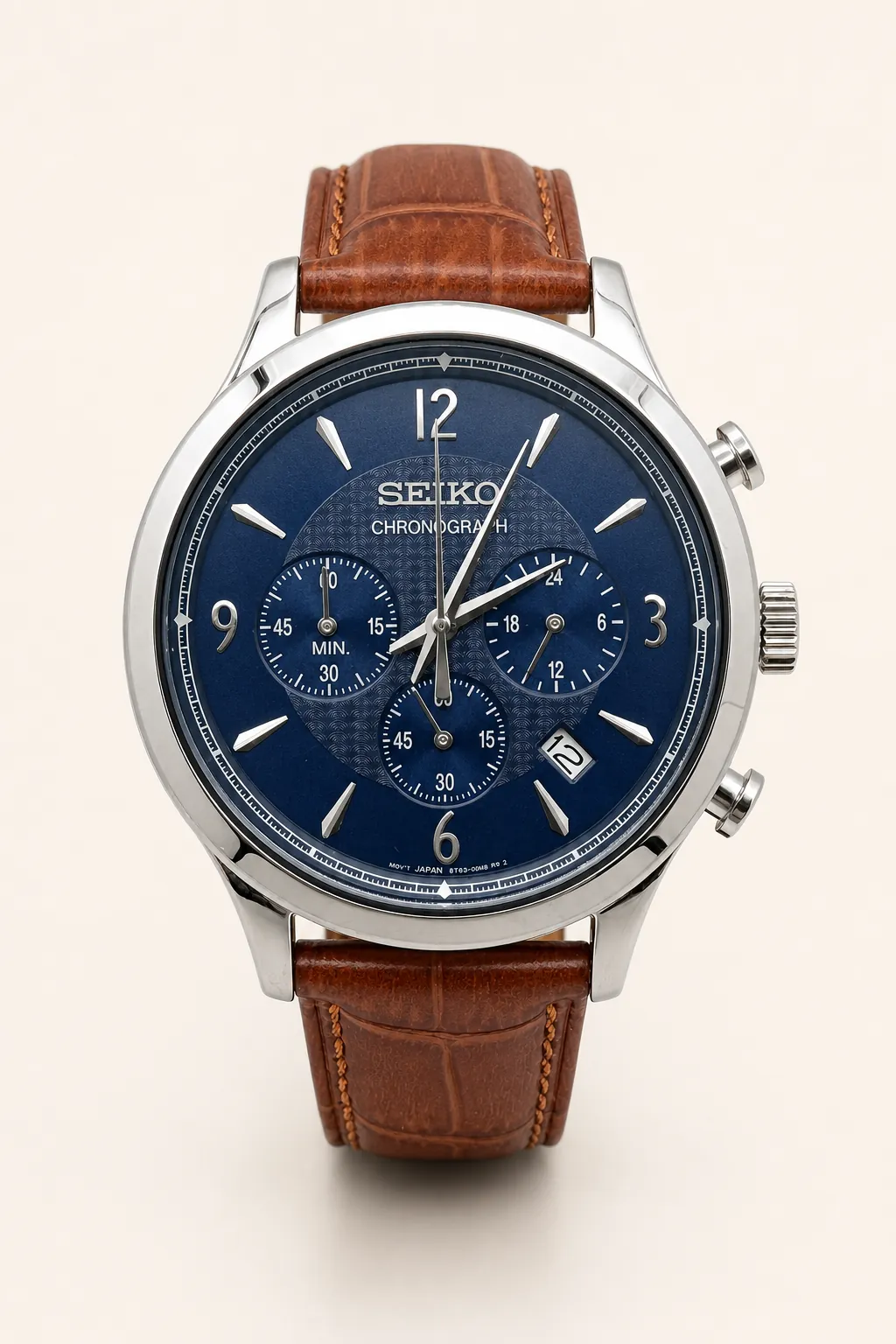
5. Know When to Stop and Check the Manual
Chronograph pushers should have a definite, controlled feel. If one is unusually stiff, sticky, loose, or unresponsive, stop pressing it. Do not use a pusher underwater unless the watch is specifically rated and designed for that use. If the watch has screw-down pushers, make sure they are properly released before operating the timer and secured again afterward, following the maker’s directions.
Do not reset an ordinary chronograph while it is running. Do not pull out the crown and press buttons at random to “fix” a hand that is slightly out of alignment. And do not assume a vintage, restored, or unfamiliar watch follows the same instructions as a new quartz model. Those small guardrails preserve the parts that make a chronograph interesting in the first place.
If you are comparing a restored model with a new everyday watch, the product details matter. A pre-owned piece may have a different movement, water-resistance history, and service needs than a current production chronograph. Read the listing, and use REMI’s contact page when a specific watch raises a question before you buy or operate it.
How REMI Makes Chronographs Easy to Choose
REMI’s chronograph watch collection brings together current Pursuit models and a restored Seiko option, so the stopwatch function can fit different styles. The Pursuit uses a Seiko TMI VK63 mecaquartz movement, while the individual listing is the right place to confirm the material, strap, and care details for the exact watch you are considering.
A chronograph should feel like a watch you want to wear even before you press a pusher. Choose the dial color and strap that suit your day, then learn the start, stop, and reset rhythm at your own pace. If fit is part of the decision, the guide on how a watch should fit and the guide to measuring watch size make it easier to compare a new piece with one you already enjoy wearing.
A Simple Chronograph Checklist
- Use the crown to set ordinary time and date.
- Identify the running-seconds hand before deciding that a watch has stopped.
- Reset the stopwatch hands to zero before timing an event.
- Use the upper pusher to start and stop on a standard chronograph.
- Read the elapsed time before pressing the lower reset pusher.
- Check the model manual before changing hand alignment or using unfamiliar controls.
- Stop and ask for help if a crown or pusher feels wrong.
The best way to learn a chronograph is to use it for small, real moments. Time a walk, a steeped tea, or a task at your desk. After a few rounds of start, stop, read, and reset, the extra hands stop looking complicated. They become exactly what they were meant to be: a practical little stopwatch on your wrist.
Common questions
Setting a Chronograph Watch FAQ
Why is the big second hand on my chronograph not moving?
On many chronographs, the large center hand is the stopwatch seconds hand, not the watch’s ordinary running seconds hand. It stays at 12 until you start the timer with the upper pusher. The small seconds subdial usually shows that the watch itself is running.
Can I reset a chronograph while it is running?
Usually, no. Stop the timer first, then use the reset pusher. A flyback chronograph is a special exception designed to reset and restart while running. If your watch manual does not specifically say it has a flyback function, use the normal stop, read, reset sequence.
Why do my chronograph hands not return to zero?
A quartz chronograph may need its hands recalibrated after a battery change or a hard knock. The exact reset sequence varies by movement, so use the model manual rather than trying random button combinations. If the hands cannot be aligned through the stated procedure, a watchmaker should inspect it.
Does setting the time also set the chronograph?
No. The crown sets the ordinary time and often the date. The pushers run the separate stopwatch function. Set the time with the crown, then make sure the stopwatch hands are at zero before using the chronograph.
Keep reading
Related Posts
Watch care
How to Wind an Automatic Watch Safely
Learn how to start an automatic watch carefully and set it up after it stops.
Read the guide →
Watch fit
How to Adjust a Metal Watch Band at Home
Size a bracelet safely, fine-tune the clasp, and know when to stop.
Read the guide →
Watch fit
How to Measure Watch Size for a Better Fit
Compare wrist, case, lug-to-lug, and strap measurements with confidence.
Read the guide →