Watch Guides
How to Measure Watch Size for a Better Fit
Measure your wrist, case, lug-to-lug length, and strap width to find a watch that feels as good as it looks.
Back to Watch Guides →
A watch can be beautifully made and still be wrong for your wrist. The good news is that getting the fit right is less mysterious than watch talk sometimes makes it sound. A tape measure, a ruler, and a few plain dimensions tell you far more than a product photo alone. Start with your wrist, then look at the case as a complete shape rather than chasing one diameter number.
The Short Answer
To measure watch size, first measure your wrist circumference where you normally wear a watch. Then compare four case dimensions: diameter, lug-to-lug length, thickness, and lug width. Diameter describes the width of the watch case, lug-to-lug describes its end-to-end reach, thickness affects how tall it sits, and lug width tells you which strap fits. For most people, lug-to-lug and comfort matter more than an arbitrary rule about what size a watch should be.
Most watch listings give case diameter in millimeters, while strap listings use the inside distance between the lugs. Nixon's guide to lug width and strap measurement shows the same useful distinction: case size and the gap where a strap attaches are separate measurements.
1. Measure Your Wrist First
Use a soft tape measure around the wrist bone where your watch usually rests. Keep it comfortably snug, not pulled tight. Write the number down in inches or millimeters. If you do not have a tape measure, wrap a strip of paper, string, or charging cable around your wrist, mark where it overlaps, then lay it flat against a ruler.
Wrist circumference gives you a starting point, not a verdict. Two wrists with the same circumference can have different shapes. A rounder wrist gives a case more curved surface to sit on. A flatter wrist can make a long watch feel broader because more of the case is visible from above. That is why an online purchase is easier when you use the numbers to narrow the field, then judge the full case shape.
Do not measure a watch strap while it is buckled as a substitute for measuring your wrist. Straps vary in hole placement, taper, and how much the material gives. Your wrist is the stable reference point. The strap is the adjustable part.
2. Understand Case Diameter
Case diameter is the width of the watch head, usually measured across the round part of the case and not including the crown. It is the number most brands lead with because it is simple to compare. A 36 mm dress watch will usually read smaller and quieter than a 42 mm dive watch, but the number alone does not tell you how either one will wear.
Use diameter as a first filter. A smaller diameter tends to suit someone who wants a compact, understated watch. A larger diameter gives the dial more presence and can make legibility easier. Dial color, bezel width, and the amount of open space around the markers also change the apparent size. A dark dial with a wide bezel can look more compact than a light, open dial in the same case diameter.
When you measure an existing watch, place a ruler or caliper across the case at its widest point, excluding the crown and pushers. The Mayors watch size guide also separates case diameter from wrist size, which is helpful because neither measurement makes much sense on its own.
3. Check Lug-to-Lug Length Before You Decide
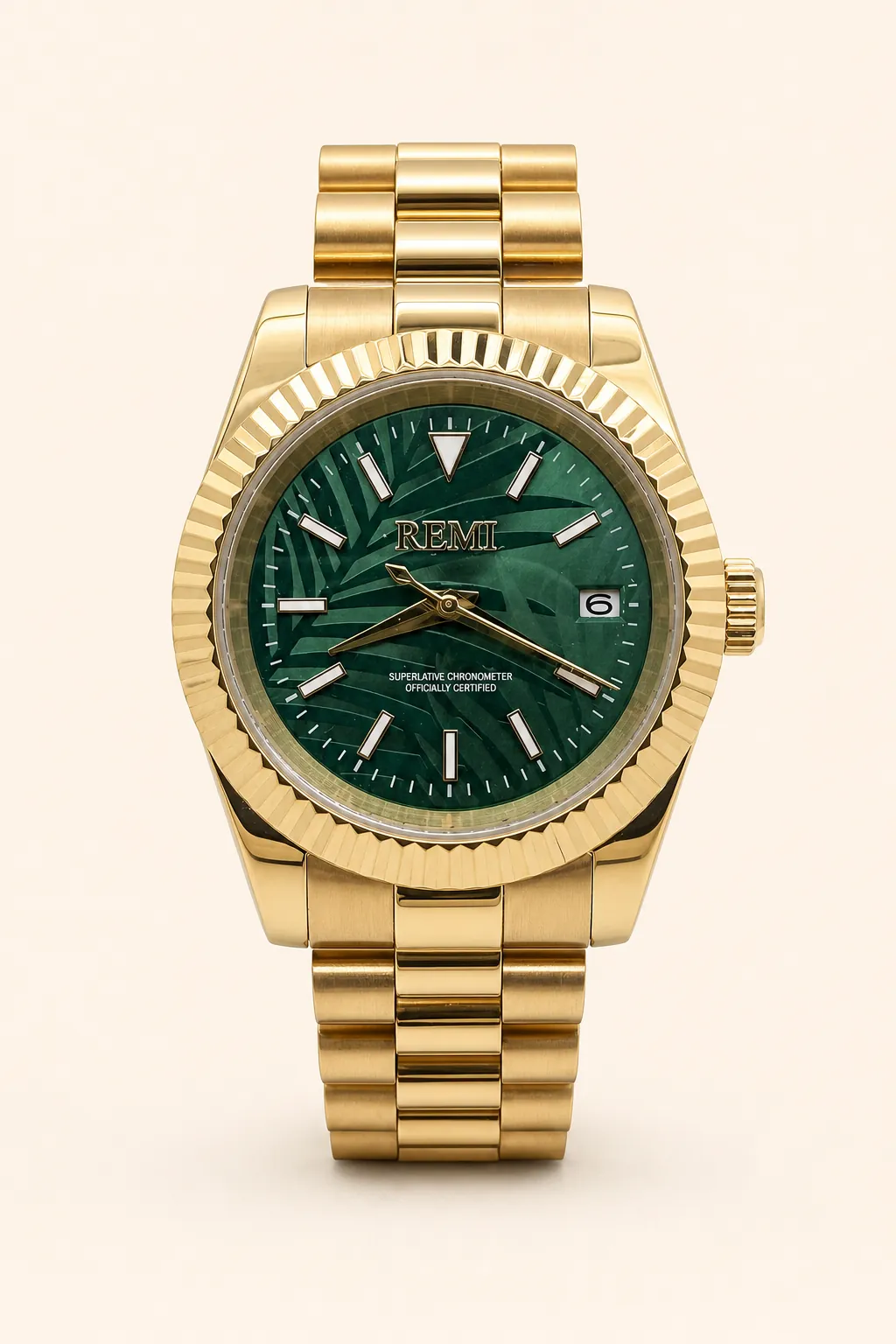
Lugs are the two arms of the case that hold the strap or bracelet. Lug-to-lug is the distance from the tip of one lug to the opposite tip. This is often the measurement that prevents a watch from feeling too large. If the lugs extend past the top of your wrist, the watch can look and feel awkward even when its diameter seemed reasonable.
Measure lug-to-lug by laying the watch flat and running a ruler from the outermost tip at 12 o'clock to the outermost tip at 6 o'clock. Curved lugs can make a watch wear shorter because they drop around the wrist. Straight, extended lugs can make the same diameter wear longer. A short 40 mm diver and a long 40 mm field watch are not interchangeable just because the dial opening is similar.
As a practical check, look down at your wrist with the watch on. The lugs should normally sit within its top surface rather than overhanging the edges. This is a comfort guideline, not a law. Some people deliberately like an oversized look. But if the case rocks, catches on a cuff, or leaves the strap pulling sideways, it is worth trying a shorter case shape.
4. Do Not Ignore Case Thickness
Thickness is the distance from the caseback to the top of the crystal. It matters most under sleeves and for people who prefer a watch that sits close to the wrist. A thick watch can be excellent when its purpose calls for it, such as a diver with strong water resistance or a mechanical movement with more vertical space. It simply has a different presence than a thin dress watch.
Measure thickness by standing the watch on its side and using a ruler or caliper from the caseback to the highest point of the crystal. Exclude a domed crystal only if the maker lists the case separately, because your cuff does not care where the extra height came from. In day-to-day wear, total height is what you feel.
Thickness is also about balance. A compact diameter with a tall case can feel top-heavy on a narrow strap. A larger case can still wear comfortably when its profile is low and the strap holds it close to the wrist. Product dimensions are there to help you predict this before the watch arrives, not to make the purchase feel like homework.
5. Measure Lug Width for the Right Strap
Lug width is the inside gap between the lugs where the strap attaches. It is almost always measured in millimeters. This is the number you need when buying a replacement leather, nylon, rubber, or quick-release strap. Measure the empty gap, not the outside width of the case and not the buckle end of the old strap.
A properly sized strap fills that gap neatly. A strap that is too narrow leaves visible space and can shift around. One that is too wide may be forced into the lugs, mark the case, or pinch the spring bars. The strap may taper toward a smaller buckle, which is normal. What matters is that the watch end starts at the exact lug width.
For a standard spring-bar watch, the practical fitting steps are covered in our guide to changing a watch strap at home. Once you know the lug width, browsing the wider REMI collection makes it easier to compare the case and strap styles that suit the way you wear a watch.
6. Use the Numbers to Compare the Whole Watch
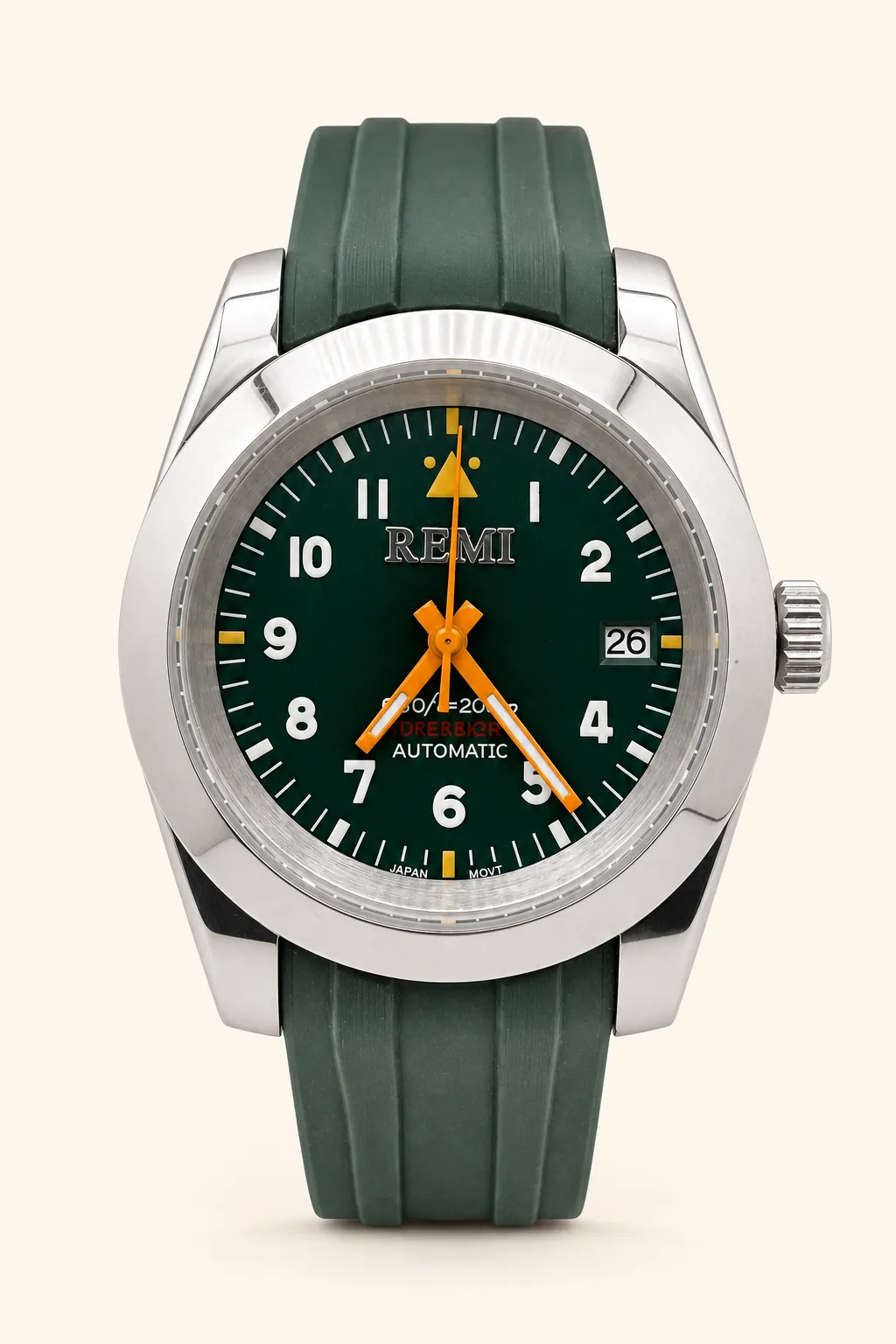
A useful product listing gives you a small set of measurements, not just one. Read them together. A 36 mm case with compact lugs can feel classic and restrained. A 39 mm case with a longer lug span may have more wrist coverage than you expect. A 40 mm watch with a wide bezel can look tighter than a 40 mm watch with a broad, open dial. A watch on a bracelet can feel more substantial than the same case on a thin leather strap.
Do not try to convert wrist circumference into one perfect diameter. Those size charts can be a helpful starting point, but they cannot account for case shape, personal taste, or the way a watch is meant to be worn. Instead, compare a prospective watch with one you already own and enjoy. Measure that watch's diameter and lug-to-lug length, then use those dimensions as your personal baseline.
Photos help too, especially when you view the watch straight on and from the side. Look for an image that shows the lugs, crown, and overall profile. Be careful with close-up product photos, which can make a compact watch look much larger than it does in person. A close photo is useful for details. It is not a ruler.
7. Fit the Strap or Bracelet, Then Wear It for a Minute
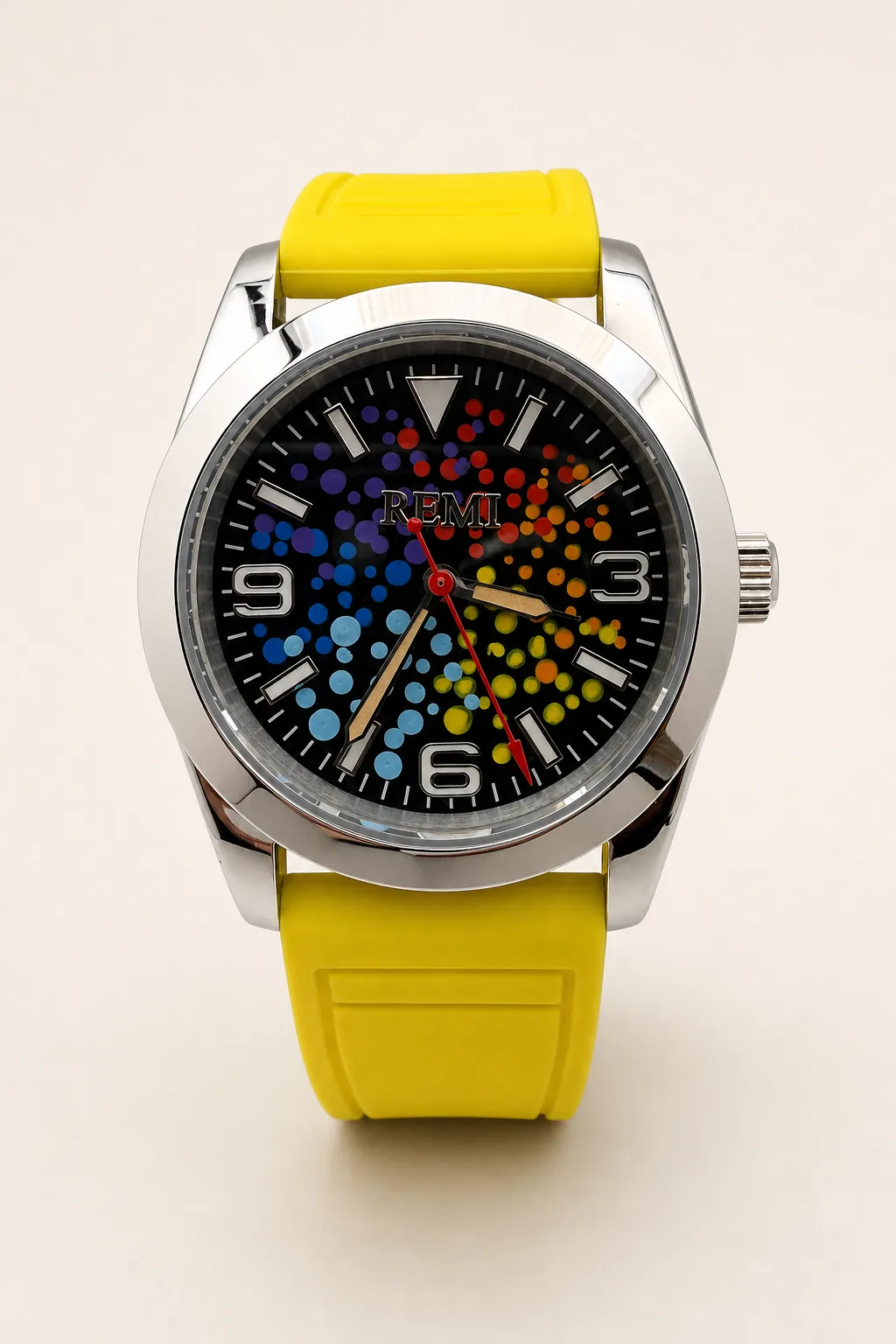
A good fit leaves enough room for the watch to move slightly without sliding down onto your hand. You should be able to get the tip of one finger under the strap, but the case should not spin around your wrist when you turn your arm. With a bracelet, remove or add links evenly when possible so the clasp stays centered underneath the wrist.
Wear the watch for a few minutes before deciding. Bend your wrist, reach for a pocket, rest your hand on a desk, and pull on the sleeve you wear most often. A watch that looks perfect in a mirror can reveal a sharp clasp edge, a tall profile, or a strap that needs one more adjustment when it meets ordinary movement.
Material changes the fit as much as size. Leather breaks in and often feels slimmer. Nylon can be adjusted more precisely and suits active days. Rubber is a natural choice around water and heat. A metal bracelet feels more structured and may need seasonal adjustment. Keep the strap clean and dry, especially after warm or wet days. The guide to cleaning a watch strap without damage explains the right care for each material.
How REMI Helps You Find the Right Fit
REMI's range makes it easier to compare the dimensions and character that suit your routine. A compact piece such as the Sovereign Dress 36 mm offers a smaller case footprint, while the Sovereign Dress 39 mm gives the same dress-watch direction more presence. A field automatic brings a more casual, tool-watch profile into the mix.
For a restored piece, give the case and bracelet their own careful look. Vintage dimensions can be more compact than current fashion, and that can be exactly the appeal. The pre-owned watch guide is a good place to understand condition and fit before choosing a particular find. For a specific question about a watch or strap, REMI's contact page gives you a direct way to ask.
A Quick Watch-Size Checklist
- Measure your wrist where you normally wear a watch.
- Use case diameter as a starting point, not the final answer.
- Check lug-to-lug length so the case stays within the top of your wrist.
- Consider thickness if you wear fitted cuffs or dislike a tall profile.
- Measure the inside lug gap in millimeters before buying a new strap.
- Compare prospective dimensions with a watch you already wear comfortably.
- Adjust the strap or bracelet for a secure fit, then test it in normal movement.
The right watch size feels natural quickly. It stays put, clears the wrist comfortably, and looks like it belongs there. Once you know the few dimensions that matter, you can shop the current REMI collection with more confidence, whether you are choosing a first watch, changing a strap, or adding a different shape to the rotation.
Common questions
Watch Size FAQ
What is the most important watch measurement?
Lug-to-lug length is often the most useful fit measurement because it shows how much of your wrist the watch will cover from end to end. Case diameter still matters, but two watches with the same diameter can wear very differently when their lugs have different lengths or shapes.
How should a watch fit on the wrist?
A watch should feel secure without pinching, and its lugs should usually stay within the top surface of your wrist rather than hanging over the edges. The case should sit comfortably between the wrist bones. A little visual preference is normal, but discomfort is a useful sign that the watch or strap needs another size.
Does a larger wrist always need a larger watch?
No. Wrist shape, lug-to-lug length, case thickness, dial design, and strap all change how a watch wears. A compact watch can look purposeful on a broader wrist, while a long lug-to-lug case can feel too large on a flatter wrist even when the diameter sounds modest.
How do I know what strap size to buy?
Measure the inside gap between the lugs in millimeters. That measurement is the strap width at the watch end. A strap can taper toward its buckle, but the end that meets the case needs to match the lug width exactly.
Keep reading
Related Posts
Watch care
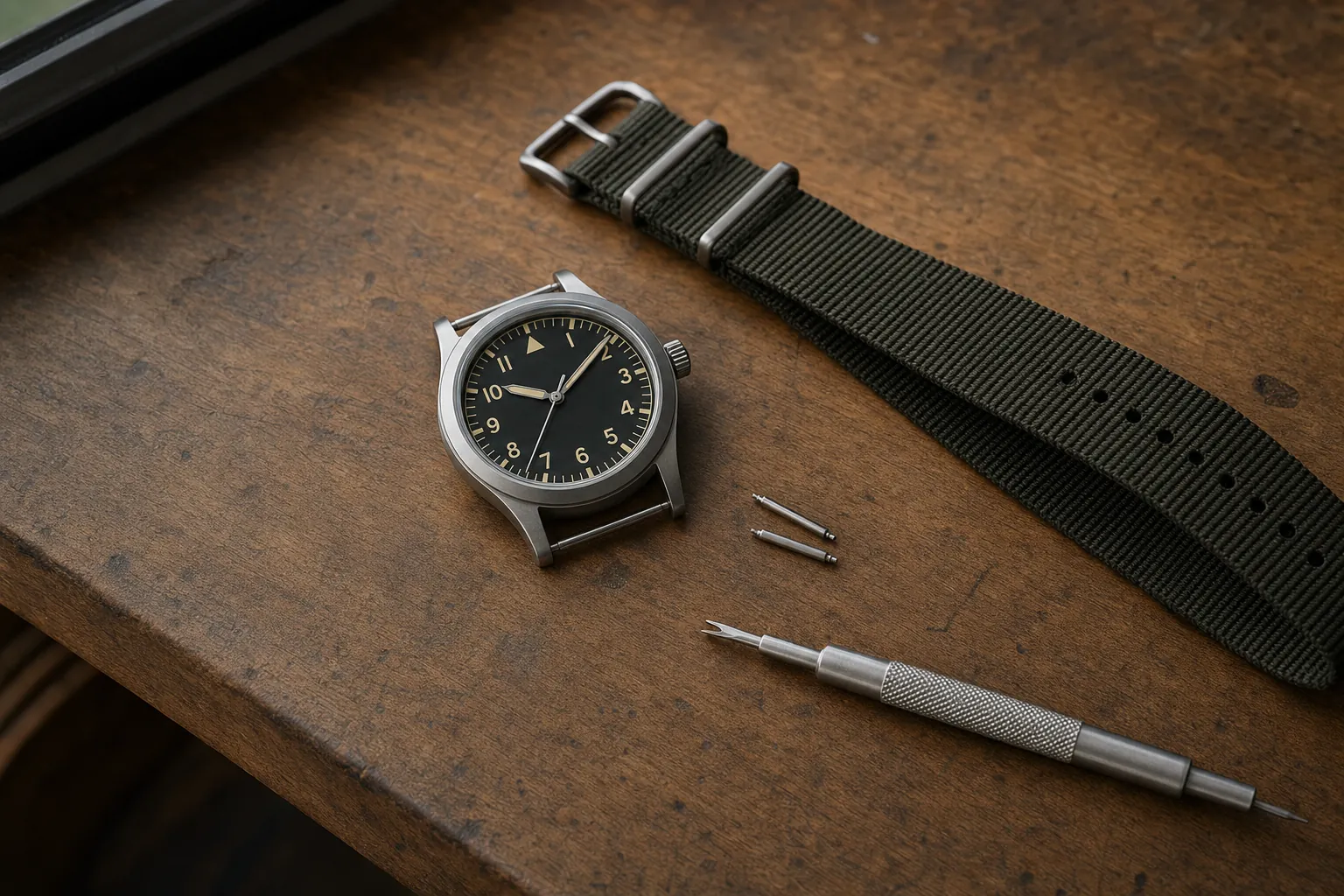
How to Change a Watch Strap at Home
Choose the right fit, swap a standard strap, and make sure it is secure.
Read the guide →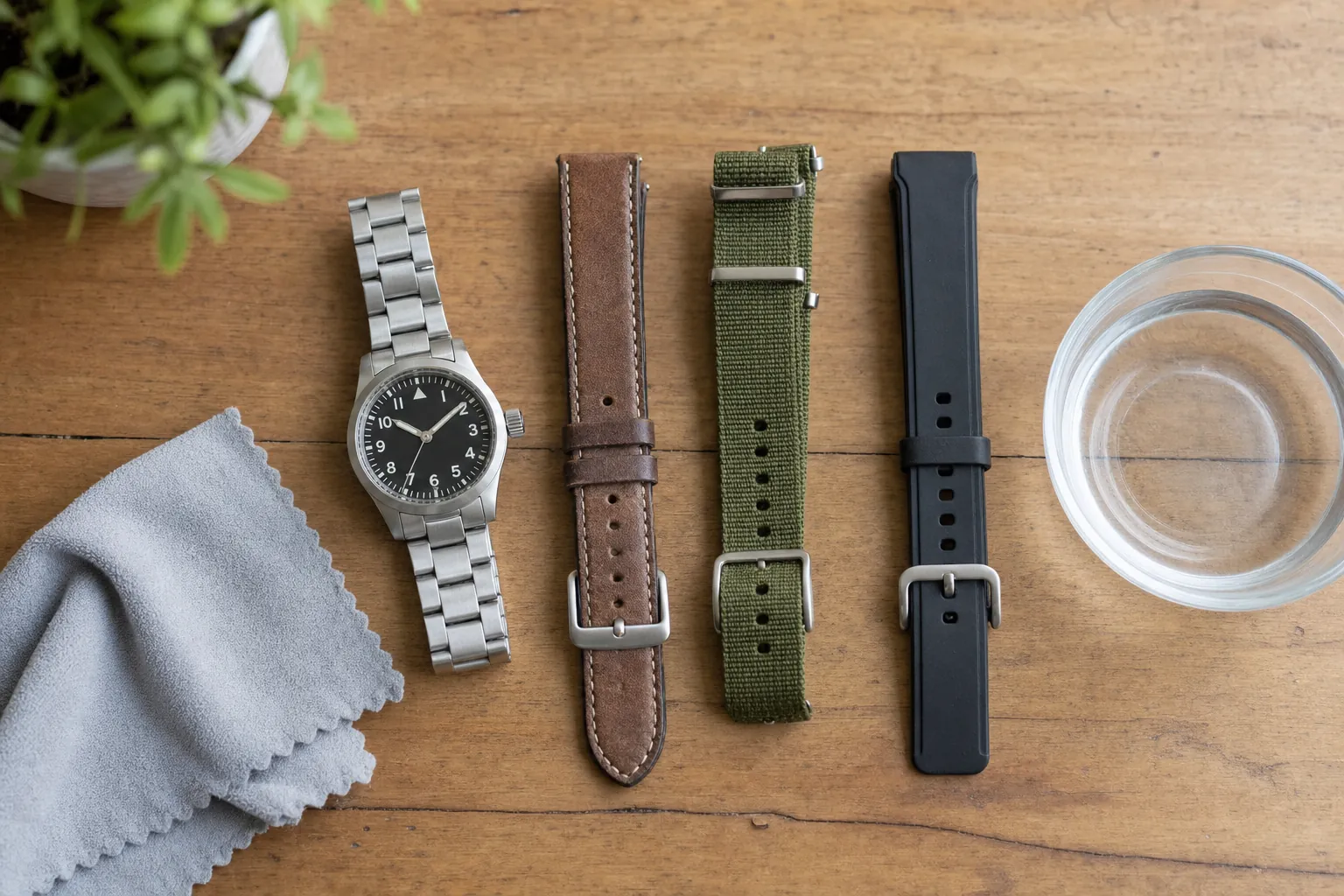
Watch care
How to Clean a Watch Strap Without Damage
A material-by-material care guide for leather, nylon, rubber, and metal bracelets.
Read the guide →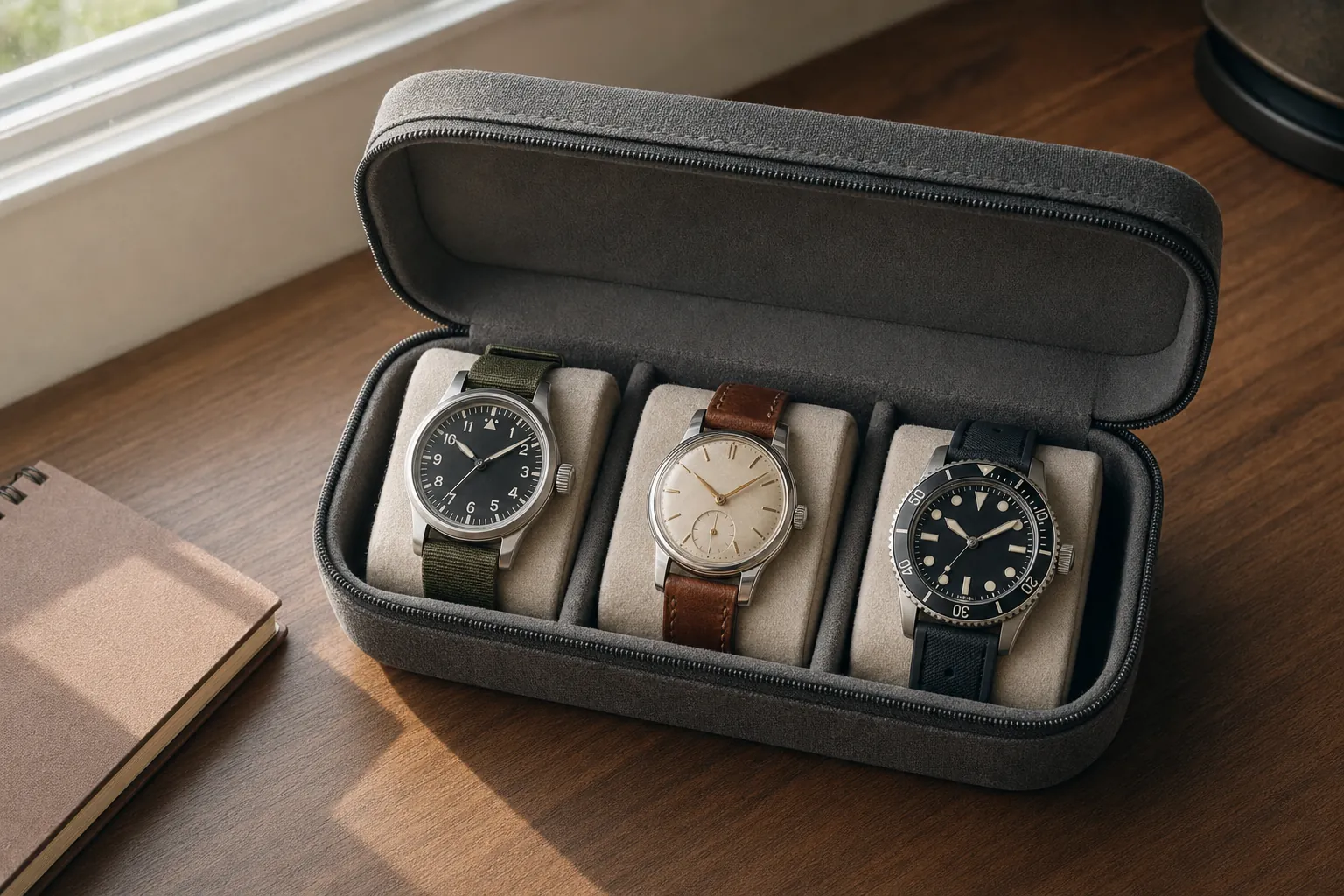
Watch care
How to Store Watches Without Damaging Them
Practical storage advice for daily wear, travel, automatic watches, and restored finds.
Read the guide →