Watch Guides
How to Store Watches Without Damaging Them
A practical guide to storing watches safely at home or while traveling, from daily storage to longer breaks in the rotation.
Back to Watch Guides →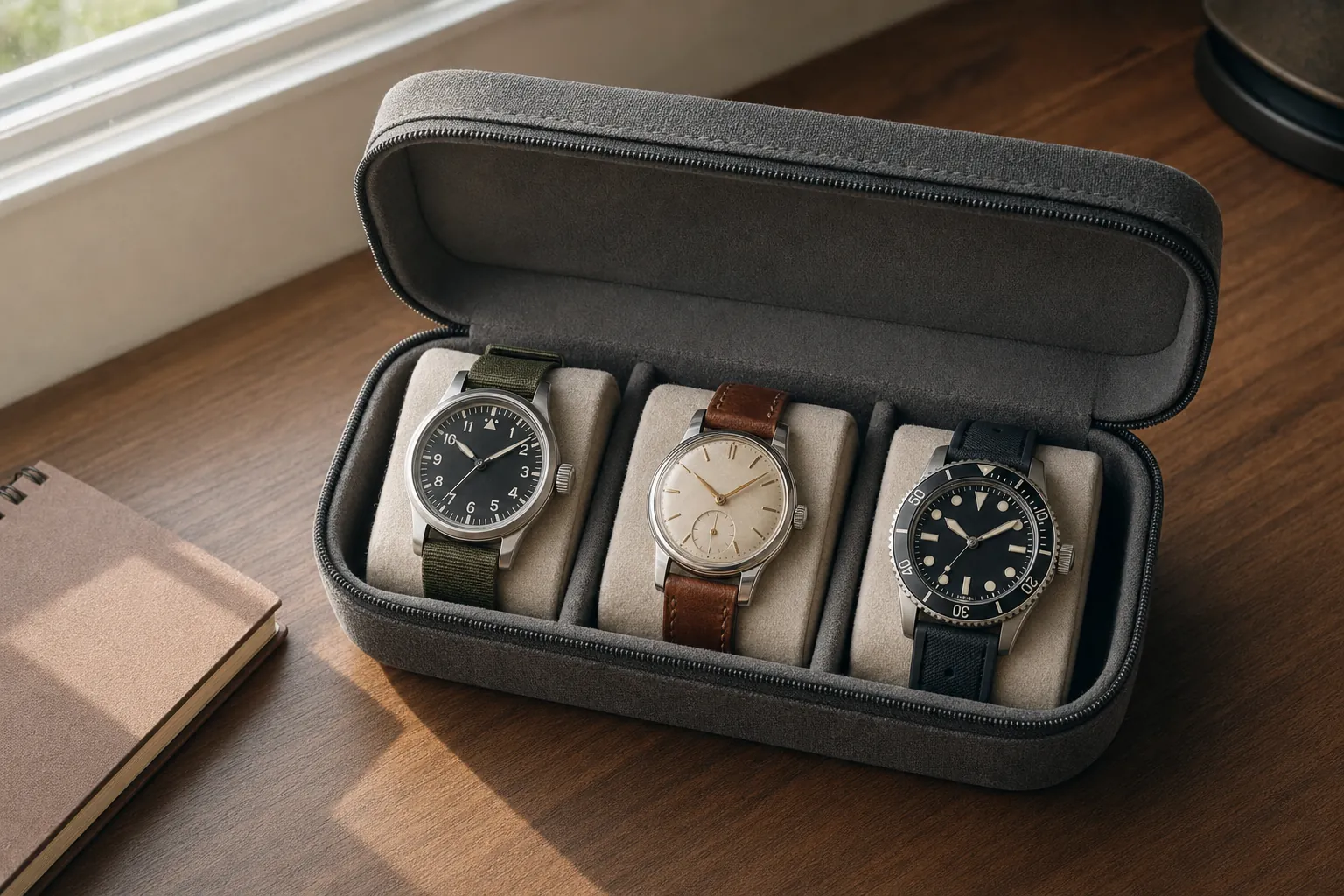
A watch does not need a ceremonial vault when it comes off your wrist. It does need a calm place to land. The most useful storage protects the crystal and case from hard contact, keeps moisture and strong magnets out of the picture, and makes it easy to pick the watch up again without hunting through a drawer. A modest collection can be cared for just as well as a larger one when the routine is simple and consistent.
The Short Answer
Store watches in a dry, stable place where they will not rub against each other or collect dust. A watch box, drawer organizer, soft pouch, or padded tray all work when each watch has its own space. Keep the crown pushed in or properly secured, wipe off moisture before storage, and avoid bathrooms, window ledges, speaker cabinets, and loose drawers full of hard objects.
The broader care advice from Longines on watch storage reaches the same practical conclusion: a watch benefits from protection against dust, humidity, temperature extremes, and impacts. The best setup is the one that fits your home and does those basic jobs every day.
Give Every Watch Its Own Space
Most storage damage is not dramatic. It is a bracelet sliding against a polished case, a buckle resting on a crystal, or a watch rolling against keys in a drawer. The easy solution is separation. A watch pillow in a box is useful because it supports the strap and keeps the case still. A soft-lined drawer tray does the same job. For one watch, a clean microfiber cloth or soft pouch in a dedicated spot can be enough.
Do not stack watches face to face or wrap several together in one cloth. Leather straps can transfer color when stored damp or pressed against another strap for a long time, and metal bracelets have plenty of edges that can mark a neighboring case. Leave a little room around each piece, even if the collection is only two or three watches.
A restored pre-owned watch deserves the same simple separation, with a little extra attention to its particular condition. A watch with honest case wear can still be worn proudly. There is no reason to add fresh marks from a careless drawer.
Choose a Dry, Steady Location
Think less about finding the fanciest container and more about finding a quiet room. A bedside drawer, closet shelf, dresser drawer, or desk cabinet is usually a better choice than a bathroom or kitchen. Those busier spaces have steam, splashes, heat, and faster swings in humidity. Even a water-resistant watch is not improved by being stored near a daily cloud of shower steam.
Keep watches out of direct sunlight too. Sun can heat a case quickly, fade some leather straps, and put unnecessary stress on oils, seals, and adhesives over time. A closed drawer or box has another small advantage: it keeps dust off the watch, so you are not wiping grit across the crystal every time you put it on.
If your home gets especially humid, choose an enclosed box or drawer and add a small fresh desiccant packet nearby. Keep it beside the watch, not pressed against leather or tucked into a bracelet. The goal is not to turn the drawer into a laboratory. It is simply to avoid leaving watches in a damp, stale environment.

Keep Watches Away From Strong Magnets
Magnets are easy to overlook because the problem is often not obvious at the storage spot. Speakers, tablet covers, charging docks, magnetic tool strips, and some purse or bag closures can all bring a watch close to a magnetic field. Mechanical watches are the main concern because magnetism can affect components that help regulate timekeeping. Quartz watches can be affected too, depending on their design and the strength of the field.
There is no need to panic about every modern device across the room. Just do not make a magnetic accessory or speaker the watch’s permanent home. If a mechanical watch suddenly begins gaining or losing time after storage near something magnetic, stop assuming it needs more winding. A watchmaker can check it properly, and the REMI warranty and care information is the right place to start for a new REMI watch.
Prepare the Watch Before You Put It Away
A thirty-second reset before storage pays off. Wipe fingerprints, sweat, or water from the case and bracelet with a clean microfiber cloth. If the watch was worn in rain, around a pool, or on a hot day, let it air-dry first. For leather, patience matters. Do not put a damp leather strap straight into a closed box, where moisture has nowhere useful to go.
Make sure the crown is fully seated. A screw-down crown should be gently threaded back into place, never forced. Close the clasp on a bracelet if it helps the watch sit neatly, but do not cinch a leather strap around a pillow so tightly that the holes or padding are stressed. The goal is support, not tension.
The guide to cleaning a watch strap without damage has material-specific care for leather, nylon, rubber, and metal. Clean storage starts with a clean, dry watch, not with a better box.
How to Store an Automatic Watch
An automatic watch can stop when it is not being worn. That is normal. Its power reserve runs down, then you wind and set it when it returns to your wrist. You do not need a watch winder simply because you own an automatic, especially when the watch has a straightforward time-and-date movement.
A winder can be convenient when a watch has a calendar or another complication that takes time to reset, but it is not a universal upgrade. It also needs to suit the movement. A winder with the wrong direction or schedule is more fuss than help, and a poorly made one can become a noisy place to leave a good watch. For most owners, a protected place in the rotation and a calm reset when the watch comes back out is the better routine.
If your REMI automatic has been resting for a while, start it carefully with the method in how to wind an automatic watch safely. The companion guide on how automatic watches work explains why the reserve runs down in the first place.
Store Watches for Travel
Travel adds the problem of movement. A loose watch in a wash bag, backpack pocket, or suitcase can knock against chargers, sunglasses, belt buckles, and whatever else shifts during the trip. Put each watch in a soft pouch, travel roll, or compact case with separate slots. A single padded pouch is enough for one watch, while a roll or zip case is easier for a small rotation.
Before closing the case, make sure the crown is secure and the watch is dry. Place it in the carry-on when possible rather than trusting it to the pressure and rough handling of checked luggage. Do not pack watches against strongly magnetic accessories, and do not leave a leather strap compressed around a hard object. Travel storage should be compact, not cramped.
A strap can help a watch fit the trip too. A washable rubber or nylon option can make more sense for heat, swimming, or a busy itinerary than leather. REMI’s straps and accessories collection includes practical choices for changing how a watch wears without changing the watch itself.

What to Avoid
A few storage habits create trouble more often than people expect. Avoid a bathroom cabinet, a sunny windowsill, the top of a speaker, a car glove box, and a loose catch-all drawer. Skip plastic bags for long-term storage unless the watch is fully dry and the bag is only a short-term dust cover. Trapped moisture is not protection.
Do not store a watch while the crown is pulled out. It is easier to bump, and it leaves the case less protected than it should be. Avoid leaving a wet watch in a closed case, spraying fragrance or cleaning products near a stored leather strap, or piling a heavy object on top of a watch roll. A storage space should reduce surprises, not quietly create them.
Long-Term Storage for Vintage and Pre-Owned Watches
For a vintage or pre-owned piece, gentle storage matters more than elaborate equipment. A fresh battery should not be left in a quartz watch indefinitely once it is near the end of its life, because a leaking battery can cause damage. A mechanical watch that is not being worn does not need to be run constantly. Keep it clean, dry, cushioned, and easy to inspect when you are ready to wear it again.
Check straps, spring bars, and clasps before returning an older watch to the wrist. Storage will not cause ordinary wear, but it gives you a chance to notice it. If the crown feels unusual, moisture appears under the crystal, the bracelet has a loose link, or a leather strap has become brittle, it is better to address that before a favorite watch has a bad day on concrete.
REMI restores watches to be worn, not permanently hidden. The pre-owned watch buying guide is a useful next read for understanding condition and refurbishment, while the contact page is there for a question about a specific piece.
A Storage Routine You Will Actually Keep
Good watch storage is modest. Give each watch a soft, separate place. Keep the area dry and out of direct sun. Wipe the watch before it goes away. Keep it away from strong magnets and loose hard objects. That is enough to protect a daily wearer, a new automatic, and a carefully restored find without turning ownership into a hobby of buying containers.
A watch earns its place by being worn. The storage setup is there to make the next wear easy, not to make the watch feel untouchable. Browse the current REMI collection when you are looking for the next companion in the rotation, then give it the same simple landing spot when the day is done.
Common questions
Watch Storage FAQ
Should I store my watches in a watch box?
A watch box is useful when it keeps each watch separate, supported, and away from dust. It is not mandatory. A drawer organizer, individual soft pouch, or clean shelf can work just as well when the watch is protected from knocks, moisture, strong magnets, and direct sun.
Is it okay to leave an automatic watch unwound?
Yes. An automatic watch can rest when you are not wearing it. It will stop after its stored power runs down, and you can wind and set it again when you return to it. A watch winder can be convenient for some complicated watches, but it is not required for a simple automatic.
Can I keep watches in the bathroom?
It is better to keep them elsewhere. Bathrooms tend to have rapid changes in humidity and temperature, especially after showers. Choose a dry room with steadier conditions instead.
How should I store a vintage or pre-owned watch?
Keep it dry, cushioned, and separate from harder objects. Do not force the crown or clasp before storing it, and avoid sealing a watch away while it is damp. A vintage piece may have more delicate seals, leather, plating, or bracelet wear than a new watch, so simple handling matters.
Keep reading
Related Posts
Watch care
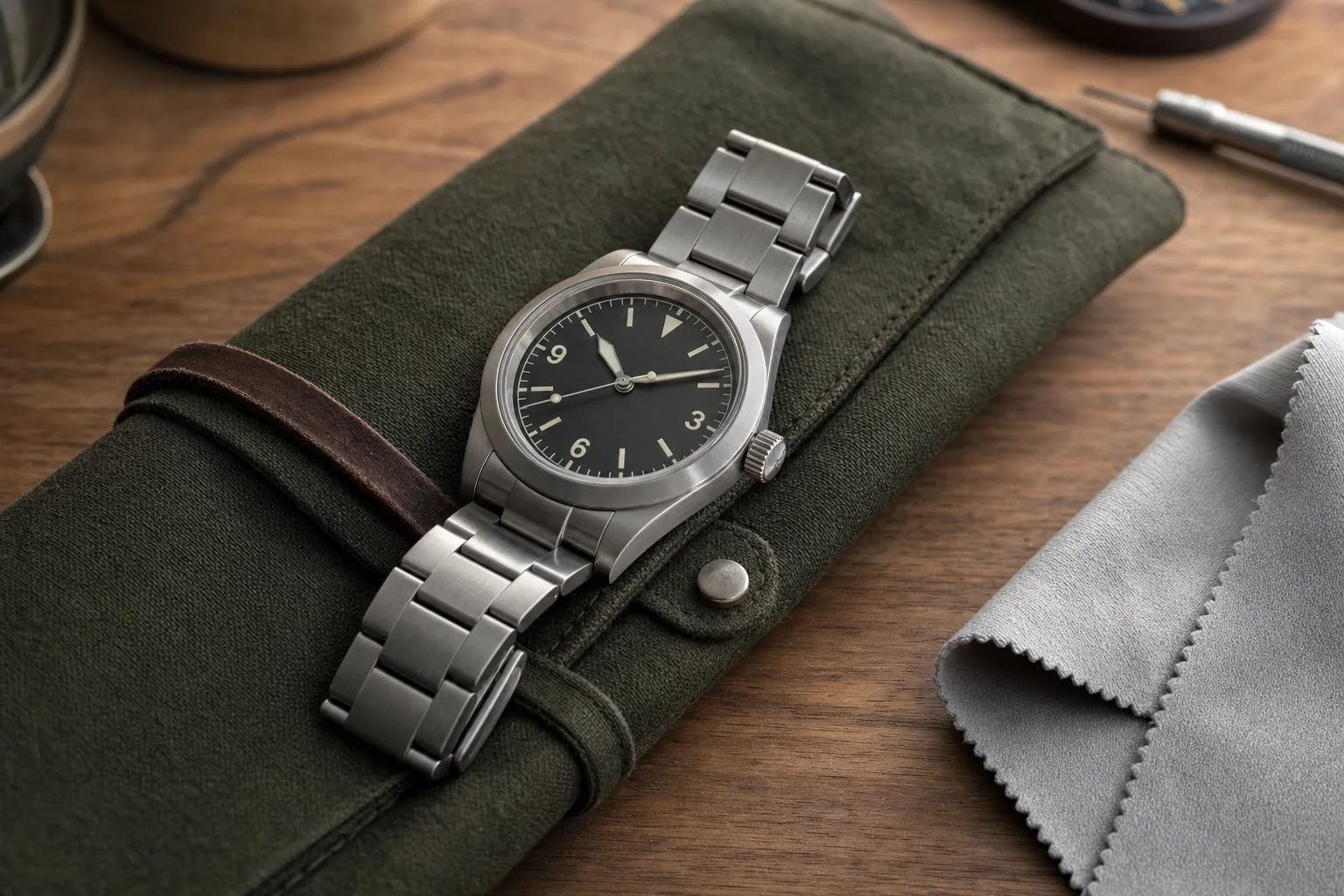
How to Wind an Automatic Watch Safely
A careful routine for winding a stopped automatic watch, setting the time, and knowing when to stop.
Read the guide →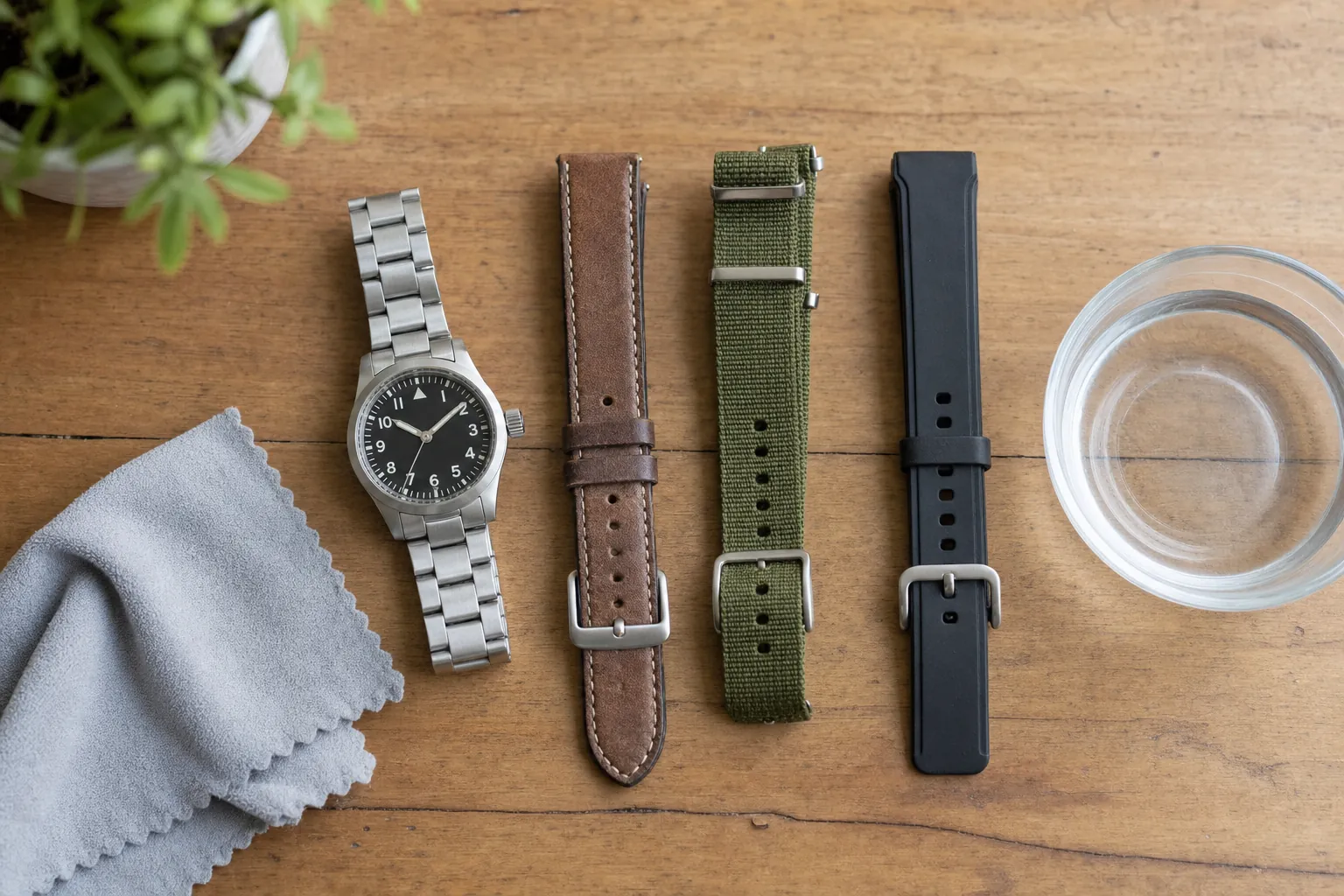
Watch care
How to Clean a Watch Strap Without Damage
A material-by-material care guide for leather, nylon, rubber, and metal bracelets.
Read the guide →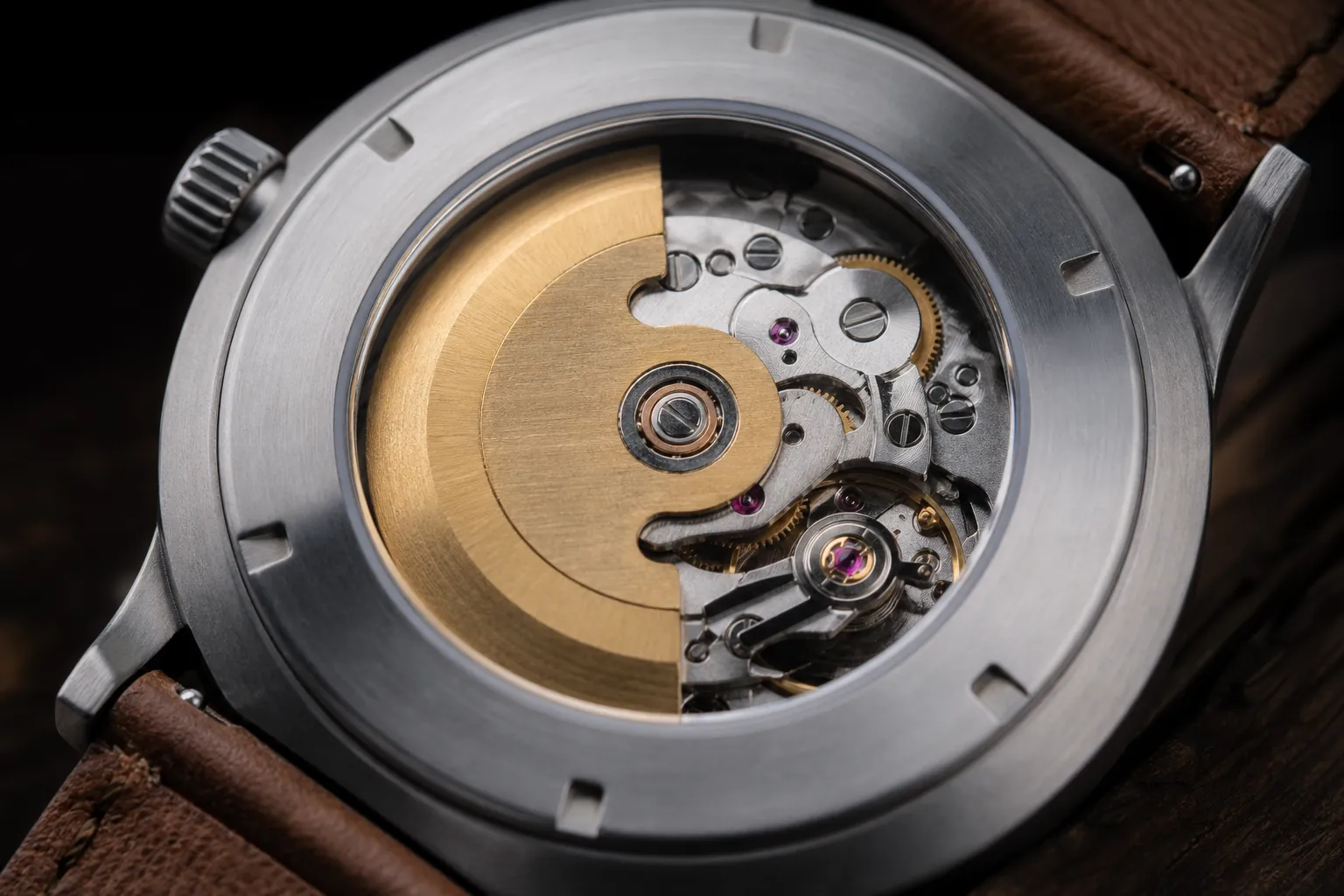
Automatic movements
How Do Automatic Watches Work?
See how the rotor, mainspring, power reserve, and balance turn daily movement into time.
Read the guide →