Watch Guides
How to Clean a Watch Strap Without Damage
A practical guide to cleaning leather, nylon, rubber, and metal watch straps without making a small mess worse.
Back to Watch Guides →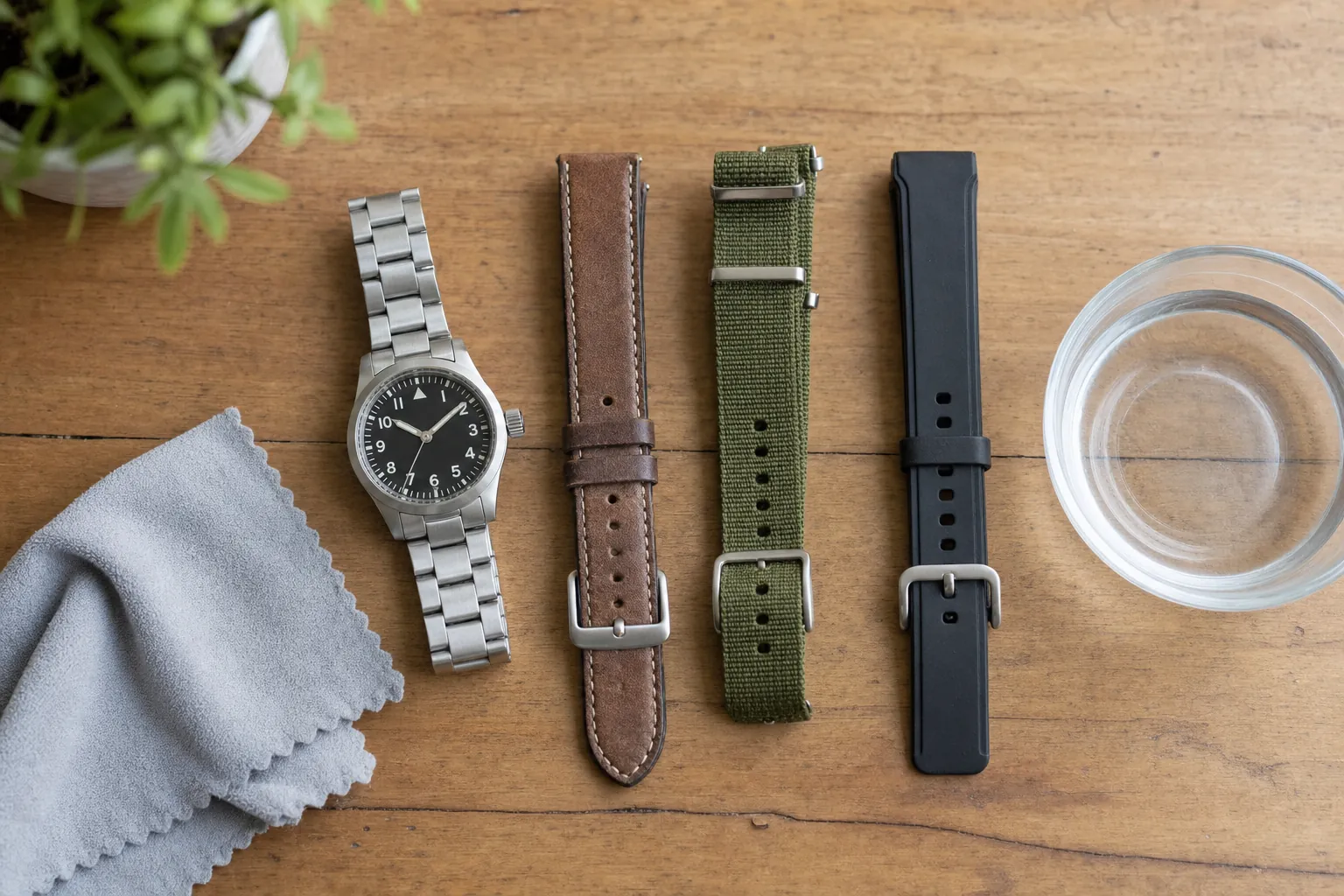
A watch strap spends more time against your skin than almost any other part of the watch. It picks up sweat, sunscreen, dust, lint, and the small marks of ordinary days. Cleaning it regularly keeps the watch more comfortable to wear and makes it easier to notice when a strap is simply ready to retire. The right method depends on what it is made from, and the safest rule is simple: use less water and less force than you think you need.
The Short Answer
Remove the strap from the watch if the attachment is straightforward, then clean it according to its material. Leather should be wiped with a dry or barely damp cloth and allowed to air-dry. Nylon and rubber can usually be rinsed and gently washed with mild soap. Metal bracelets can be cleaned with a soft brush and damp cloth when the watch itself is suitable for moisture. Never soak a leather strap, use harsh household cleaners, or put a damp strap back into a closed box.
Before you start, check the watch's own water-resistance guidance. Water resistance describes the watch case, not every strap or bracelet fitted to it. The Seiko care guide makes the same practical point in a broader way: sweat, dirt, and moisture should be removed promptly, and care should match the watch's construction.
Start by Identifying the Strap Material
Do not treat every strap as if it were rubber. Leather, nylon, silicone or rubber, and metal each tolerate moisture differently. A quick look at the underside is usually enough to tell you what you have. Leather often has a smooth or suede-like lining and stitched edges. Nylon has a woven texture and may pass underneath the case in one continuous piece. Rubber feels flexible and nonporous. A metal bracelet has linked sections and small gaps where skin oils and dust can collect.
If you are unsure, choose the gentlest method first: a dry microfiber cloth followed by a lightly damp cloth only where needed. It is easy to add a little more cleaning. It is much harder to undo a softened leather lining, faded fabric, or soap left behind in a clasp.
Get the Strap Off the Watch When You Can
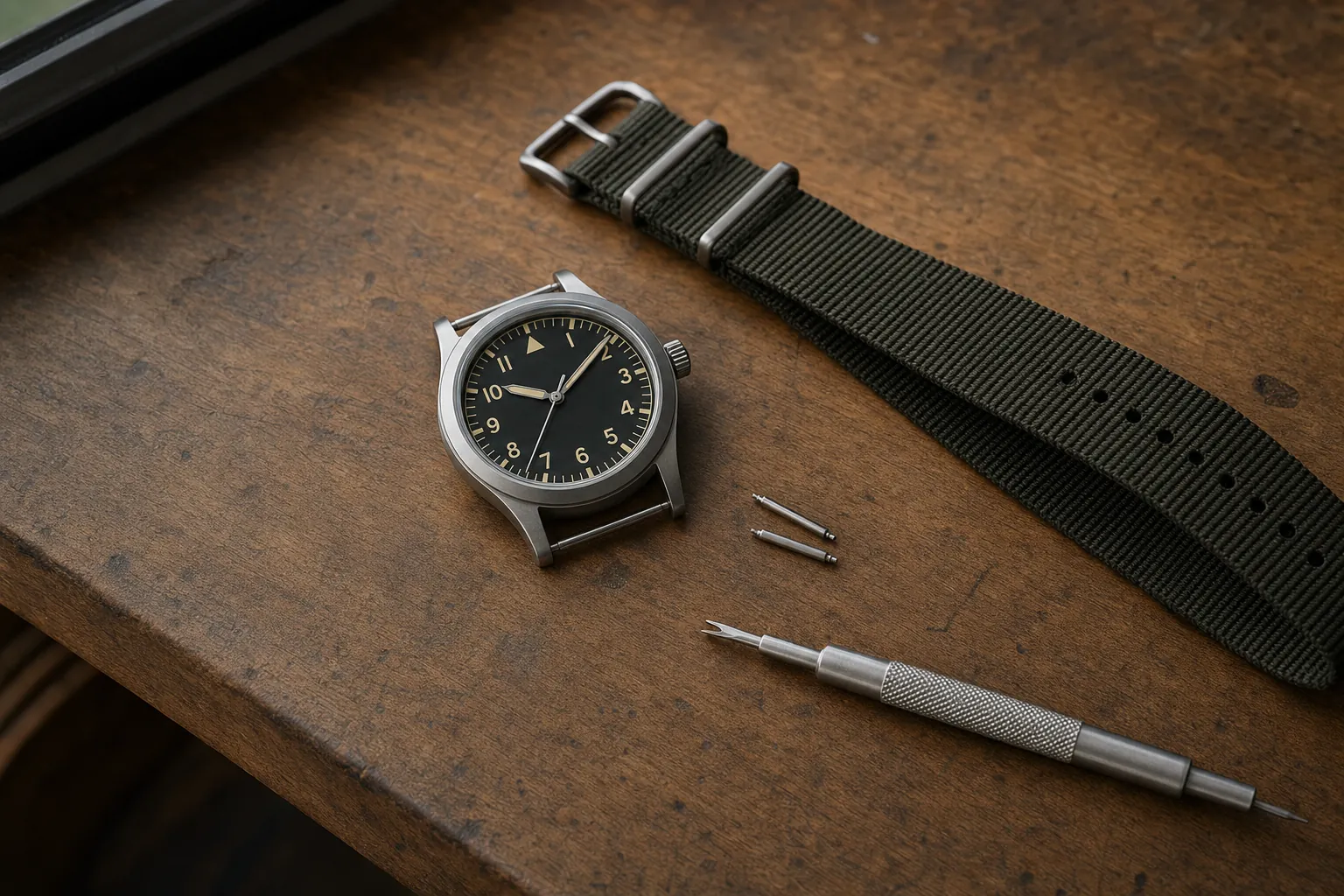
Removing a standard spring-bar strap keeps water, soap, and cleaning residue away from the case. It also lets the strap dry from both sides instead of trapping moisture where it meets the lugs. Work over a soft cloth, set the spring bars aside where they cannot roll away, and take a photo of the strap orientation before you begin if you are new to the job.
Not every strap is meant to come off at home. Integrated bracelets, fixed lugs, screw-held bracelets, and fragile vintage attachments need a more careful approach. In those cases, use a nearly dry cloth around the strap and keep liquids well clear of the watch head. The guide to changing a watch strap explains how to tell a standard spring-bar attachment from the designs that need another method.
How to Clean a Leather Watch Strap
Leather is the material that benefits most from restraint. Start by wiping the strap with a clean, dry microfiber cloth, paying attention to the lining, buckle holes, and the fold near the buckle. If there is a stubborn mark, use a second cloth that is only barely damp, then wipe the area again with a dry cloth. Keep the strap flat and let it dry naturally at room temperature.
Do not run leather under a faucet, leave it in a bowl, or try to speed up drying with a radiator, hair dryer, or direct sun. Heat can make leather feel hard or cause it to shrink, while soaking can loosen the layers and change the shape around the holes. A small amount of leather conditioner can help a dry strap, but use a product meant for finished leather and test it on the underside first. Conditioner is for a clean, dry strap, not a shortcut around dirt.

Leather straps are consumable parts. Sweat, heat, and regular flexing eventually take their toll, even when the watch itself is in great shape. Replace the strap when the lining is peeling, the holes have stretched badly, the stitching is loose, or the strap stays stiff or smells unpleasant after a careful clean. A fresh strap is cheaper than risking the watch because a tired one failed at the buckle.
How to Clean Nylon and Fabric Straps
Nylon is forgiving, which is one reason it works so well on field watches and everyday pieces. If the strap is removable, rinse it in lukewarm water, work a tiny amount of mild soap through the weave with your fingers or a soft toothbrush, then rinse until the water runs clear. Pay attention to the keepers and folded areas, where sweat and grit tend to stay behind.
Press the strap between two clean towels to remove excess water. Do not twist it hard, because that can distort the weave and put unnecessary strain on the hardware. Lay it flat or hang it where air can move around both sides, then wait until it is fully dry before reinstalling it. If the strap goes under the watch case, make sure the section that touches the case is dry too.
For a nylon strap that only looks dusty, skip the full wash. A soft dry brush and a damp cloth may be all it needs. This lighter routine is useful between deeper cleans and helps you avoid turning ordinary care into a project.
How to Clean Rubber and Silicone Straps
Rubber and silicone straps are usually the easiest to clean. Remove the strap when possible, rinse it with clean lukewarm water, and use a small amount of mild soap with a soft cloth or soft brush. Clean around the buckle, keepers, and adjustment holes, then rinse well. Soap left on a strap can feel sticky or irritate skin, so the rinse matters as much as the scrub.

Avoid bleach, alcohol, acetone, abrasive pastes, and heavily scented cleaners. They can leave a residue or change the finish of the strap. This is especially worth remembering after a beach day or workout, when a quick fresh-water rinse is often enough to remove salt or sweat before it has time to settle in.
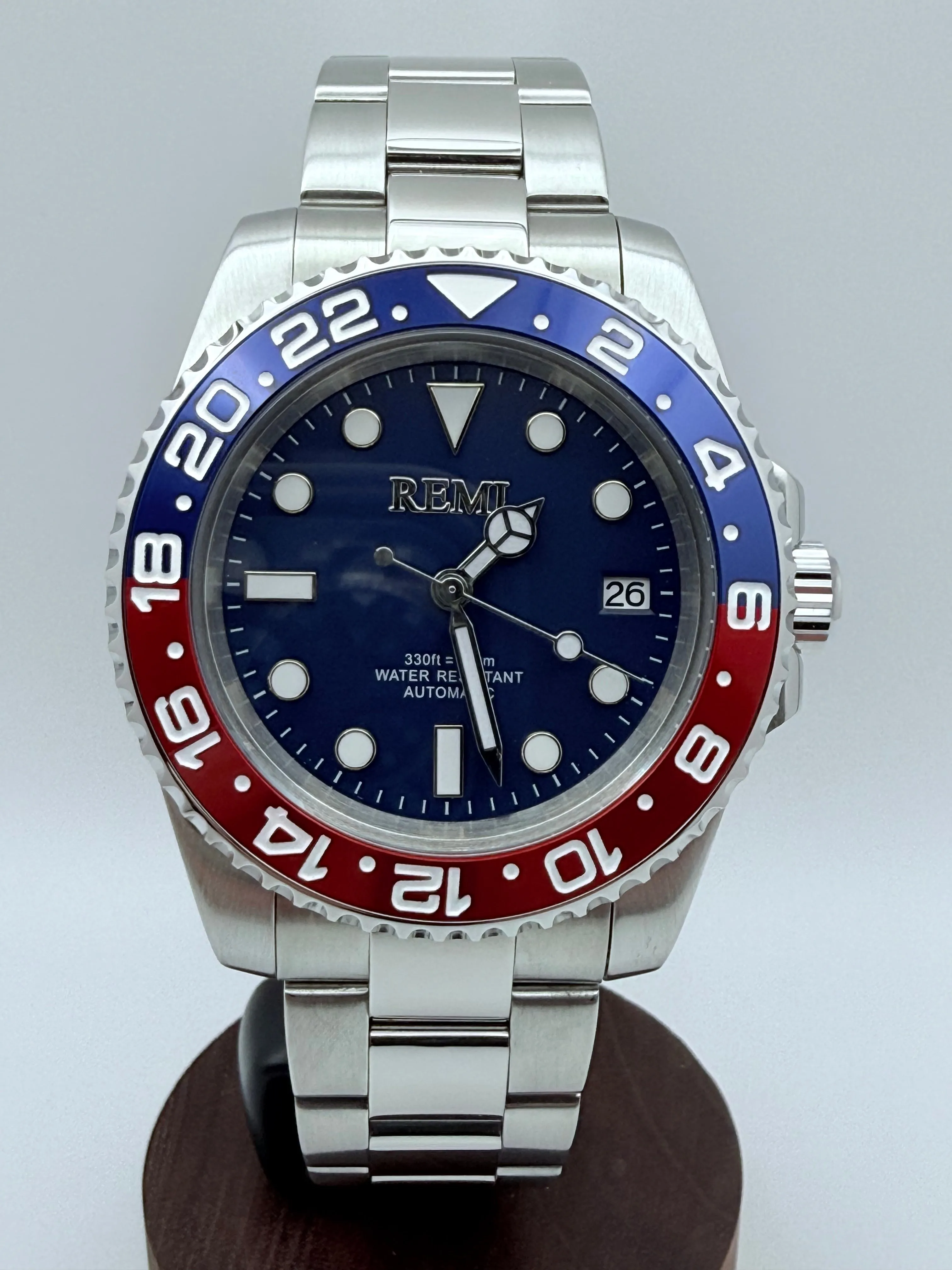
REMI's straps and accessories collection includes practical rubber and nylon options for watches that need a more washable everyday setup. Match the width at the lugs, then use the strap that makes sense for the weather and the way you actually wear the watch.
How to Clean a Metal Watch Bracelet
Metal bracelets hide dirt in the small spaces between links, under the clasp, and around the end links. Start with a dry microfiber cloth. If the bracelet is removable and the watch is known to handle moisture safely, wipe the bracelet with a soft brush that has been dampened with mild soapy water. Work gently along the gaps, then wipe it with a clean damp cloth to remove residue and dry it thoroughly.
Do not use a stiff brush, toothpaste, metal polish, or kitchen scouring pad on a bracelet. Those can change a brushed finish, dull polished links, or leave marks that are far more noticeable than the dirt you were trying to remove. A toothbrush reserved for watch care is soft enough for routine work, but it should never be an excuse to soak a watch whose water resistance is unknown.
For a pre-owned watch, be extra deliberate. REMI inspects and cleans restored finds before they are offered, but an older bracelet, clasp, or spring bar can still have more wear than a new one. The pre-owned collection is full of pieces with their own history, and a gentle maintenance routine helps preserve the good parts of that character.
What Not to Use
Strong cleaning products are rarely the answer. Bleach, ammonia, acetone, nail-polish remover, abrasive powder, strong degreasers, and harsh disinfectant wipes can damage finishes, dry out leather, and leave a film on rubber or silicone. Skip ultrasonic cleaning unless a watch professional has confirmed that it is appropriate for the exact bracelet, watch head, and condition of the piece.
Also avoid an all-purpose "quick soak." A bowl of water does not know the difference between a washable nylon strap and leather with a layered lining. The material does. Separate the strap from the watch where possible, use the smallest amount of moisture that will do the job, and make sure everything is dry before it goes back together.
When Cleaning Is Not Enough
Cleaning removes buildup. It does not repair torn stitching, cracked rubber, a bent clasp, corroded spring bars, or loose bracelet links. Inspect the strap while it is off the watch. Look at the holes, buckle tongue, keepers, spring bars, and the ends closest to the case. If a strap feels unsafe, replace it before wearing the watch again.
If the watch has suffered a hard hit, the crown feels unusual, or moisture appears under the crystal, stop cleaning and get the watch checked. The warranty and care information is the right starting point for a new REMI watch, and the contact page is available for a question about a specific strap or watch.
Keep the Routine Simple
The best watch-strap routine is the one you will repeat. Wipe the strap after sweaty or wet days. Give washable straps a gentle rinse before grime becomes permanent. Let leather dry before it goes back in a drawer. Check the spring bars whenever you change straps. Those small habits keep a watch more comfortable, make the materials last longer, and make it less likely that a favorite piece ends up on the floor because a worn strap gave up without warning.
For the wider ownership routine, read how to wind an automatic watch safely or revisit how automatic watches work. A watch does not need fussing over. It just needs the kind of care that respects the materials it is made from.
Common questions
Cleaning a Watch Strap FAQ
Can I wash a watch strap while it is attached to the watch?
It is safer to remove the strap when you can. That lets you clean the material without sending water or soap toward the case, crown, spring bars, or leather lining. If the strap cannot be removed, use a lightly damp cloth and keep moisture away from the watch head.
Can I use dish soap to clean a watch strap?
A small amount of mild soap can work for washable rubber, nylon, and metal bracelets. Use it sparingly, rinse the strap well, and dry it before putting it back on the watch. Skip soap on leather unless the leather-care product specifically calls for it.
How often should I clean a watch strap?
Wipe away sweat, sunscreen, dust, and moisture after they build up. A quick regular wipe is easier on the material than an occasional aggressive scrub. Washable straps can have a more thorough clean after hot weather, workouts, travel, or time around salt water.
How do I get odor out of a rubber or nylon watch strap?
Start with a gentle wash using mild soap and clean water, then let the strap dry fully in moving air. Do not seal it in a drawer, bag, or watch roll while it is damp. If odor remains after a careful clean, inspect the strap for cracks, sticky residue, or worn hardware and consider replacing it.
Keep reading
Related Posts
Watch care
How to Change a Watch Strap at Home
Choose the right fit, swap a standard strap, and make sure it is secure.
Read the guide →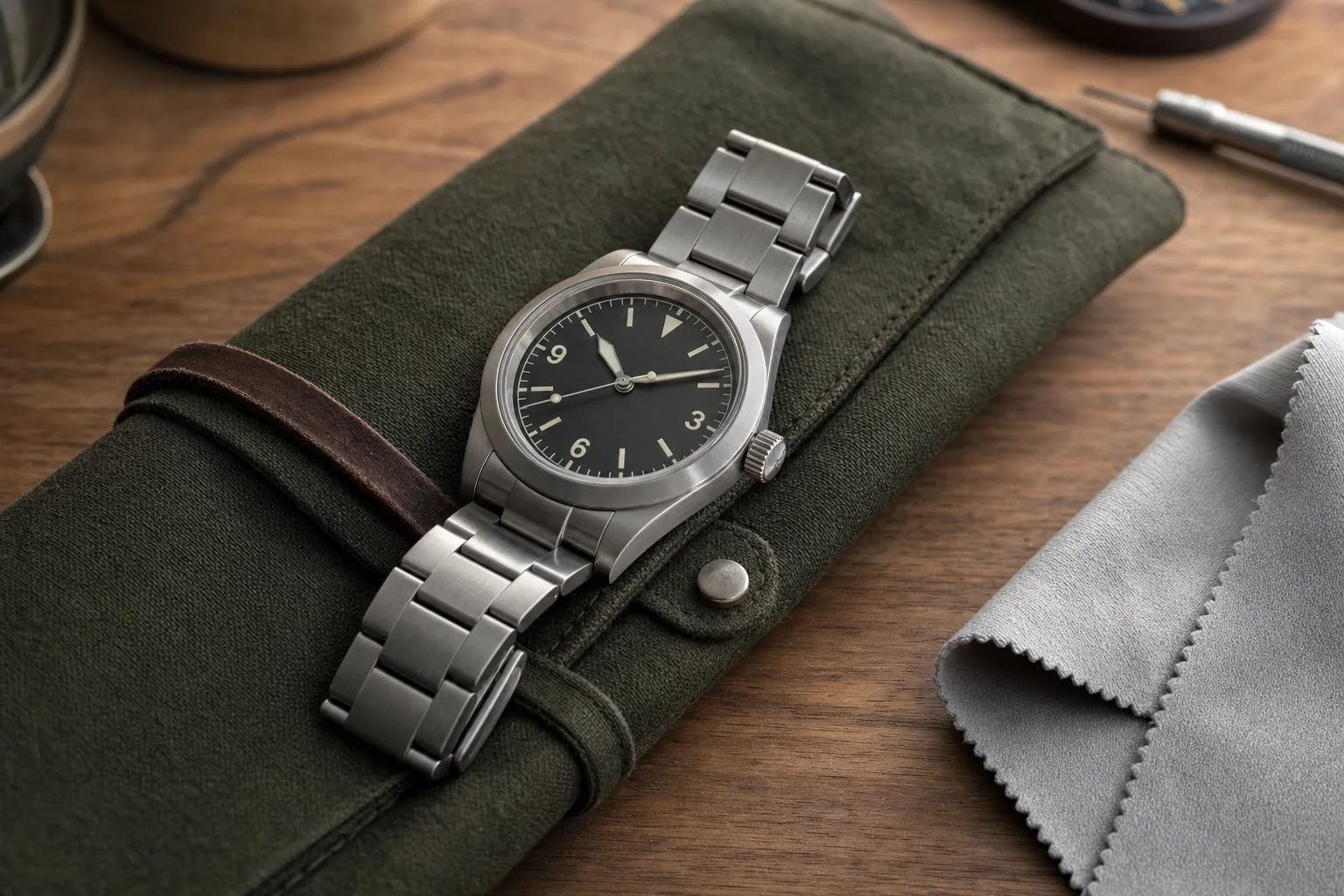
Watch care
How to Wind an Automatic Watch Safely
A careful routine for winding a stopped automatic watch, setting the time, and knowing when to stop.
Read the guide →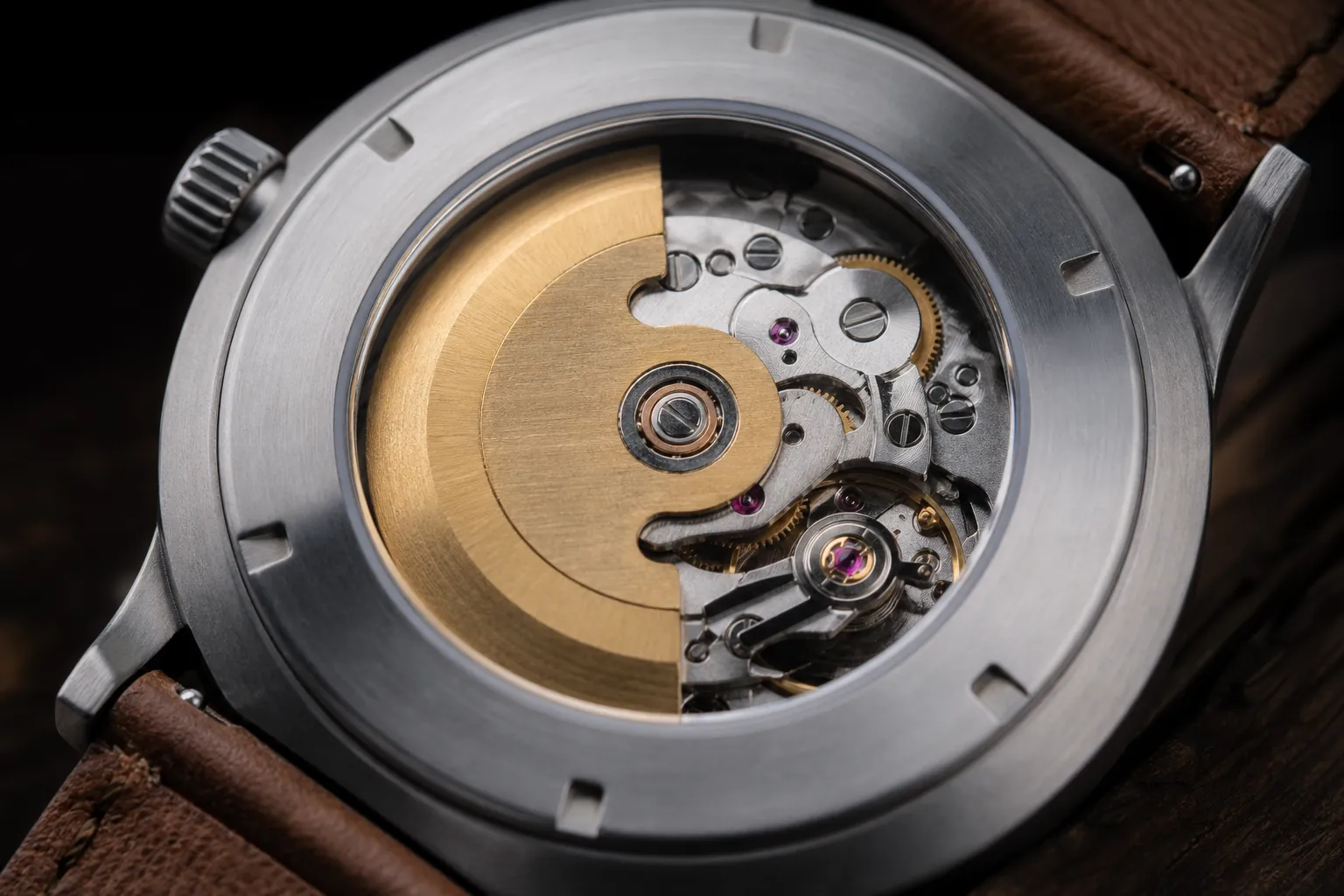
Automatic movements
How Do Automatic Watches Work?
See how the rotor, mainspring, power reserve, and balance turn daily movement into time.
Read the guide →