Watch Guides
How to Change a Watch Strap at Home
A careful step-by-step guide to changing a watch strap, checking the fit, and avoiding the small mistakes that scratch a case.
Back to Watch Guides →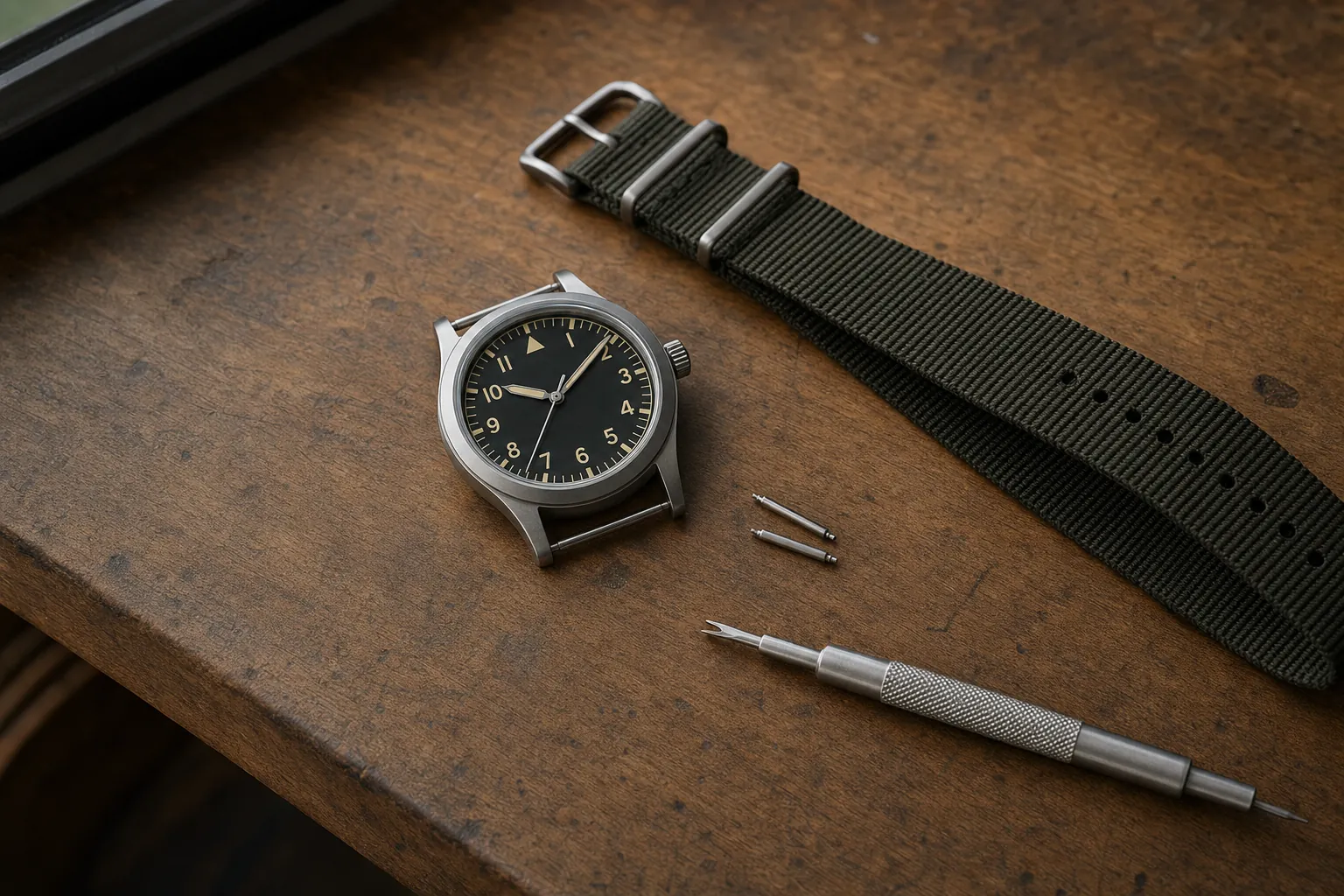
Changing a watch strap is one of the easiest ways to make a familiar watch feel new again. It can sharpen a field watch for the workweek, make a diver more comfortable in summer, or give a vintage find a second life. The job is simple when the watch uses ordinary spring bars. The important part is moving slowly enough to protect the lugs, the caseback, and the tiny pieces that hold everything together.
The Short Answer
To change a watch strap, lay the watch on a soft surface, find the spring bar at the end of the old strap, compress one end of that bar with a forked spring bar tool, and ease the strap away from the lug. Fit the new strap by seating one end of the bar in a lug hole, compressing the other end, and guiding it into place. Then give each side a gentle pull to confirm the bar has clicked in securely.
That is the whole job in principle. The details matter because not every watch has the same lugs, strap clearance, or spring bar setup. A careful first check tells you whether this is a five-minute refresh or a watchmaker job. No one wins a prize for forcing a tool into a tight gap.
Check the Watch Before You Start
Turn the watch over and look where the strap meets the case. Most standard straps sit between two lugs and are held by a slim, spring-loaded metal bar. You may be able to see a small notch in the underside of the strap where a tool can reach the bar's shoulder. A quick-release strap has a tiny sliding lever on the underside instead, so no separate tool is needed to remove that end.
Stop before you begin if the watch has fixed wire lugs, an integrated bracelet, a one-piece pass-through strap, a visible screw holding the bracelet in place, or a case with almost no clearance around the strap. Those designs can need a different method, a different tool, or professional help. The same is true for an older watch with brittle leather, bent hardware, or worn lug holes.
A pre-owned watch deserves an extra pause. Character is part of the appeal, but an old spring bar or a loosened lug is not something to discover by applying more pressure. If the attachment looks uncertain, let a watchmaker inspect it before you change the strap.
What You Need
You do not need a bench full of specialty equipment. A clean microfiber cloth, a forked spring bar tool, a small parts tray, and the correct replacement strap cover most ordinary changes. Painter's tape can be useful when you are learning, because a narrow strip along the outside of each lug helps protect the case from a slipped tool.
Work on a table rather than in your lap. Put down the cloth first, then keep the spring bars and old strap in one place as you work. These parts are small enough to bounce farther than common sense would suggest. A bright desk lamp is also worth having, especially if the watch has polished lugs or a dark strap that makes the bar hard to see.
Choose the Right Strap Size
The key measurement is the width between the lugs, usually shown in millimeters. Measure the inside gap where the strap sits, not the outside of the case. A 20 mm watch needs a 20 mm strap at the case end. A strap that is even slightly too wide can mark the lugs or buckle when you try to press it in. One that is too narrow may fit, but it leaves an awkward gap and can move around more than it should.
Width is only the first fit check. Look at the thickness near the end of the strap. A thick leather strap may fit the stated width but still crowd a case with short or closely set lugs. Curved-end straps, fitted bracelets, and some quick-release designs can be excellent matches, but they are not universal. When in doubt, compare the new strap's end with the one that is already on the watch before taking anything apart.

How to Remove the Old Strap
- Lay the watch face down on the cloth. Keep the strap end you are removing close to you. If the watch has a raised bezel or a fragile crystal, place a second soft cloth under it so the case stays steady.
- Find the spring bar shoulder. On a conventional strap, this is the tiny ridge between the strap and the inside of one lug. Approach it from the back of the watch, where a slip is less likely to be seen.
- Compress one end of the spring bar. Set the forked tip on the bar shoulder and push gently toward the middle of the strap. You are shortening the bar slightly, not prying the strap away from the watch.
- Ease the strap end down and out. Keep the bar compressed while you move the strap away from the lug hole. Once one side is free, the other end usually comes out easily. Catch the bar instead of letting it roll away.
- Repeat on the other side. Take your time. If the tool will not seat cleanly, reposition it rather than scraping along the inside of the lug.
For a quick-release strap, use the small built-in lever to compress the bar, then pull the strap end down. The motion is the same, but the lever gives you a safer grip than a separate tool. For a one-piece nylon strap, remove both spring bars, slide the old strap out, thread the new strap through the case, then reinstall the bars. Do not try to pull a one-piece strap through while both bars are still in place.

How to Install the New Strap
Put the new strap beside the watch before installing it. The shorter buckle half normally sits at 12 o'clock, while the longer half with adjustment holes sits at 6 o'clock. That familiar arrangement keeps the buckle and tail in the most comfortable position for most people. Some left-handed wearers prefer the opposite setup, and there is nothing wrong with choosing the arrangement that feels better on your wrist.
- Thread a spring bar through the strap end. Make sure the bar passes through the center tunnel and is not caught in leather, fabric, or a quick-release lever.
- Seat one end of the bar in its lug hole. Hold the strap at a slight angle so you can feel the end locate in place.
- Compress the other end. Use the tool or quick-release lever to shorten the bar enough to bring the strap between the lugs.
- Guide the strap into its final position. Let go slowly and move the strap side to side until you hear or feel the bar click into the open lug hole.
- Perform a gentle safety check. Pull the strap away from the case with light, even pressure. It should not lift free or shift out of the lug hole. Repeat for the other half.
A good click is reassuring, but it is not a substitute for the pull check. Look closely from the back to make sure both bar tips are sitting inside their holes. If one end looks proud of the lug or the strap twists strangely, remove it and try again. A few extra minutes on the table are better than watching a favorite watch fall to the floor.
Common Mistakes to Avoid
The most common mistake is using force when the tool is not placed correctly. A spring bar releases with a short, controlled compression. If you are levering hard against the lug, stop and reset. This is how small slips become a long scratch on an otherwise clean case.
Another mistake is assuming every spring bar is interchangeable. Reuse the old bars only when they are straight, clean, and the right length. A bar that is bent, corroded, or too short can release under normal wear. The exact replacement is more important on a heavier watch, but it matters on every watch.
Finally, do not treat a new strap as a reason to ignore water and material limits. Leather should be kept out of long soaks, even when the watch itself has strong water resistance. Nylon and rubber make more practical choices for sweat, rain, and active days. The watch and the strap are separate parts of the same setup, so choose both for the day you actually have planned.
When to Ask for Help
Changing a normal spring-bar strap is a useful skill. There are still cases where a watchmaker is the sensible choice: a vintage watch with delicate lugs, a bracelet held by screws, an integrated strap, a bar that will not release, or a spring bar that does not stay seated after installation. A professional can also tell you whether a case needs curved bars, a narrower profile, or a particular style of strap.
For a new REMI watch, the warranty and care information is the right first stop when an attachment point looks damaged or uncertain. For a question about an individual watch or a strap fit, the REMI contact page gives you a direct path to ask before buying something that will not work.
Give a Familiar Watch a New Role
A strap change is practical, but it is also a small way to make a watch fit more of your life. Nylon keeps a field watch relaxed and ready for regular wear. Leather brings warmth to a dressier case. Rubber is a durable choice when a watch needs to handle water, heat, or a more active day. The REMI straps and accessories collection is a good place to compare the materials and styles that work with your rotation.
REMI makes watches to be worn, and it restores pre-owned pieces with the same idea in mind. That makes a new strap more than decoration. It is one of the simplest ways to get a watch back into the regular lineup, whether you are refreshing a Trekker Field Automatic or giving a restored find a look that feels like your own.
A Quick Strap-Change Checklist
- Confirm the watch uses removable spring bars before you start.
- Measure the inside width between the lugs in millimeters.
- Protect the case and work over a soft, well-lit surface.
- Compress the spring bar rather than prying against the lug.
- Use straight, correctly sized bars that seat fully in both lug holes.
- Give each installed strap end a gentle pull before wearing the watch.
Once you are comfortable with the strap, the next useful ownership skill is understanding the movement inside the case. Read how automatic watches work, or follow the practical routine in how to wind an automatic watch safely.
Common questions
Changing a Watch Strap FAQ
Can I change a watch strap myself?
Usually, yes. A standard strap held between the lugs by spring bars is designed to be removable with a small forked spring bar tool. Work slowly on a protected surface and stop if the watch has fixed lugs, an integrated bracelet, a damaged spring bar, or a fit that does not look straightforward.
How do I know what size watch strap I need?
Measure the inside distance between the two lugs in millimeters. That is the strap width you need. The strap may taper toward its buckle, but the end that meets the watch must match the lug width.
Can I use the old spring bars with a new strap?
You can when they are straight, clean, and the correct length for the watch. Replace them when they look bent, worn, rusty, or loose. A good strap cannot make up for a spring bar that is not holding securely.
Why will my new strap not fit between the lugs?
The width may be wrong, the strap may be too thick for the clearance around the case, or the watch may need curved or quick-release bars. Do not force the strap into place. Check the watch specification or ask for help before pressing against the lugs.
Keep reading
Related Posts
Watch care
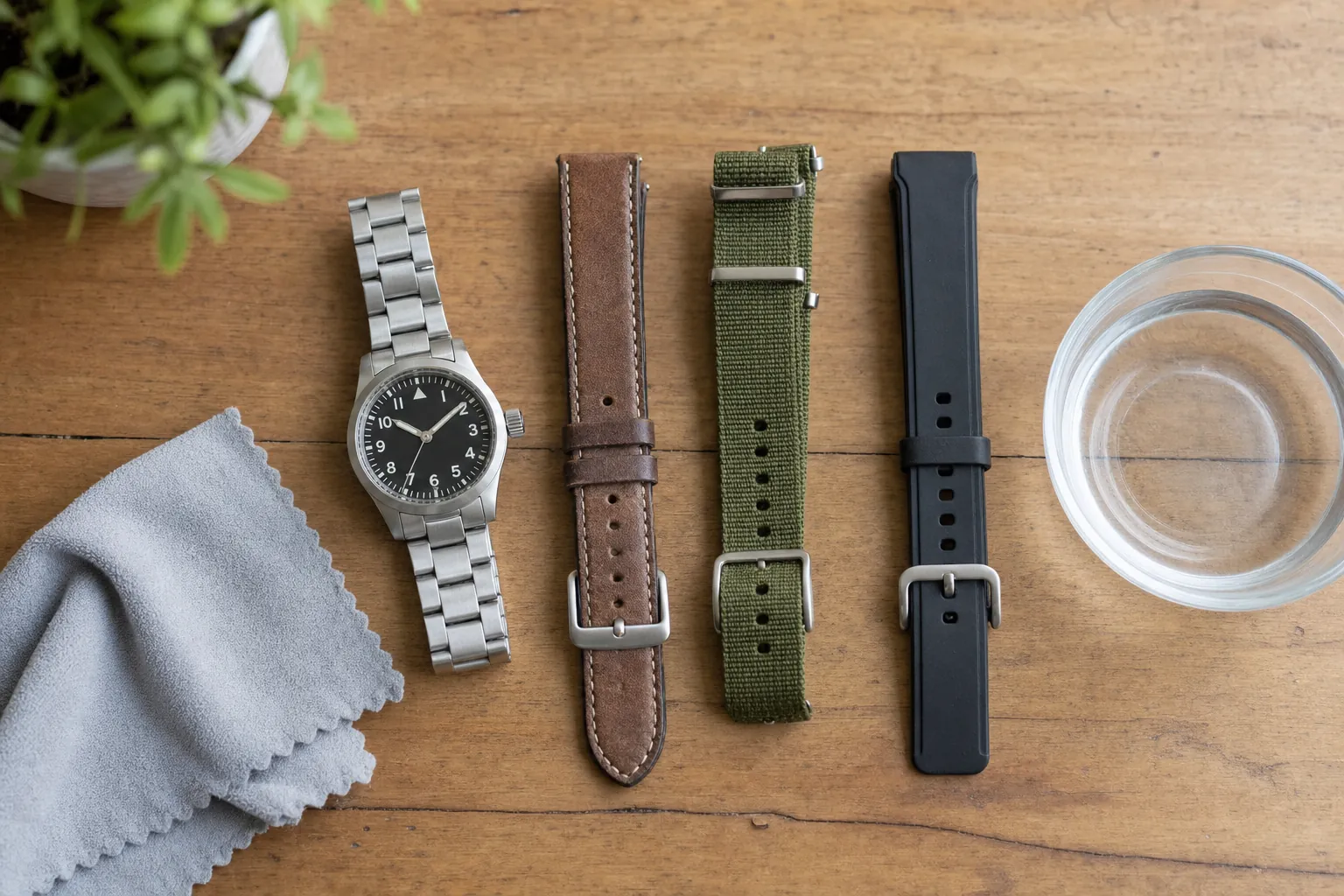
How to Clean a Watch Strap Without Damage
A material-by-material care guide for leather, nylon, rubber, and metal bracelets.
Read the guide →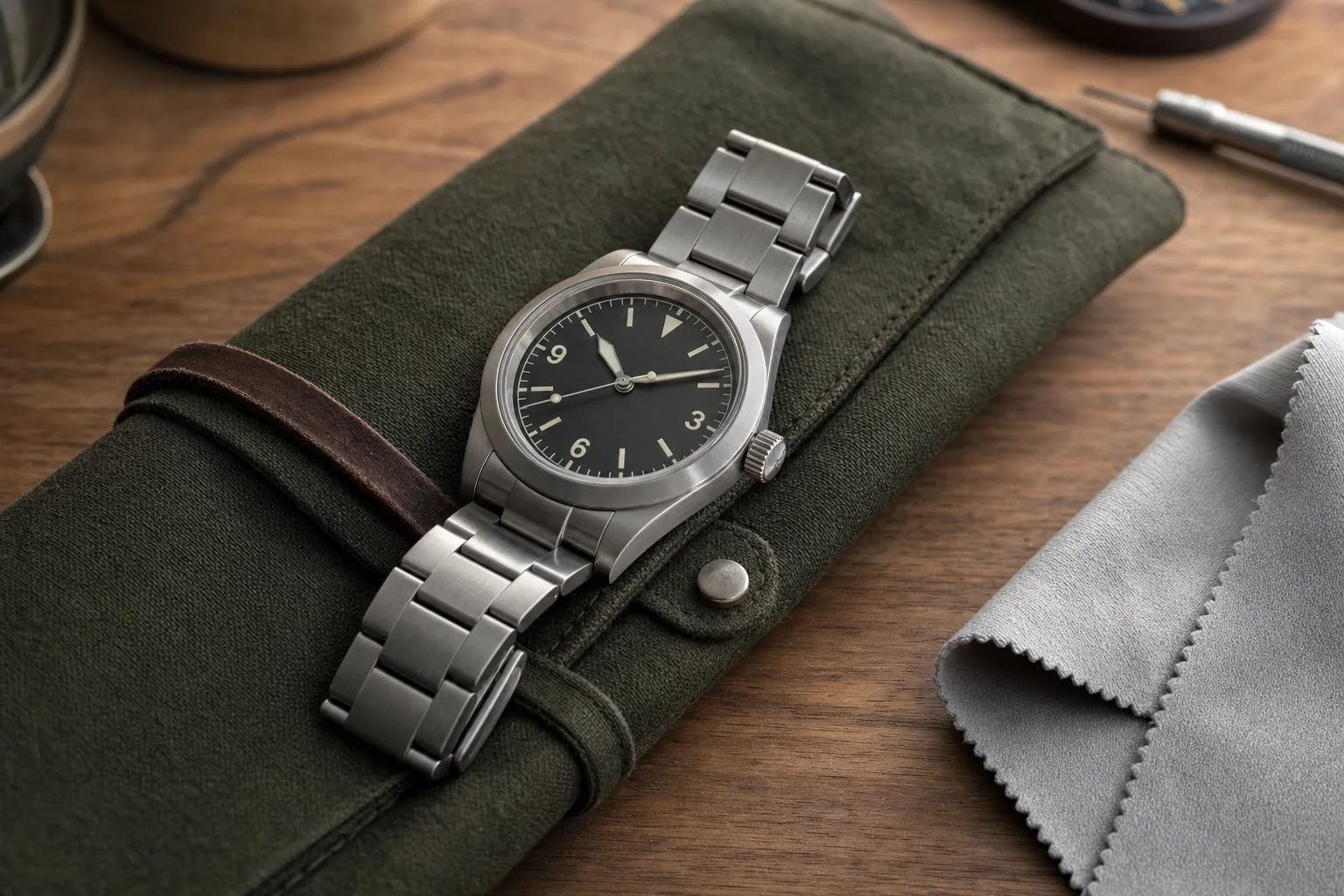
Watch care
How to Wind an Automatic Watch Safely
A careful routine for winding a stopped automatic watch, setting the time, and knowing when to stop.
Read the guide →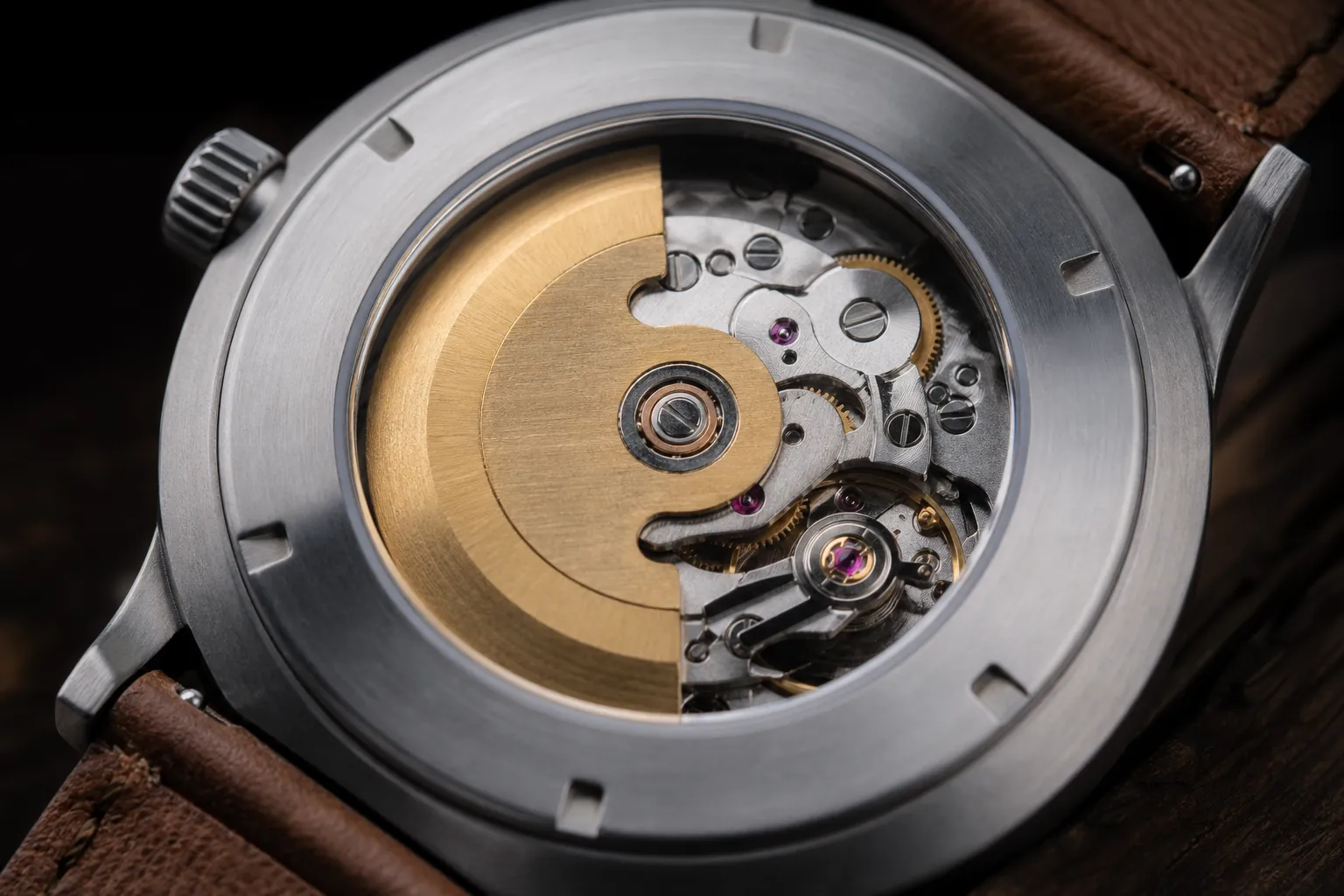
Automatic movements
How Do Automatic Watches Work?
See how the rotor, mainspring, power reserve, and balance turn daily movement into time.
Read the guide →