Watch Guides
How Do Automatic Watches Work?
A practical guide to how automatic watches turn wrist movement into time, plus winding, power reserve, accuracy, and care.
Back to Watch Guides →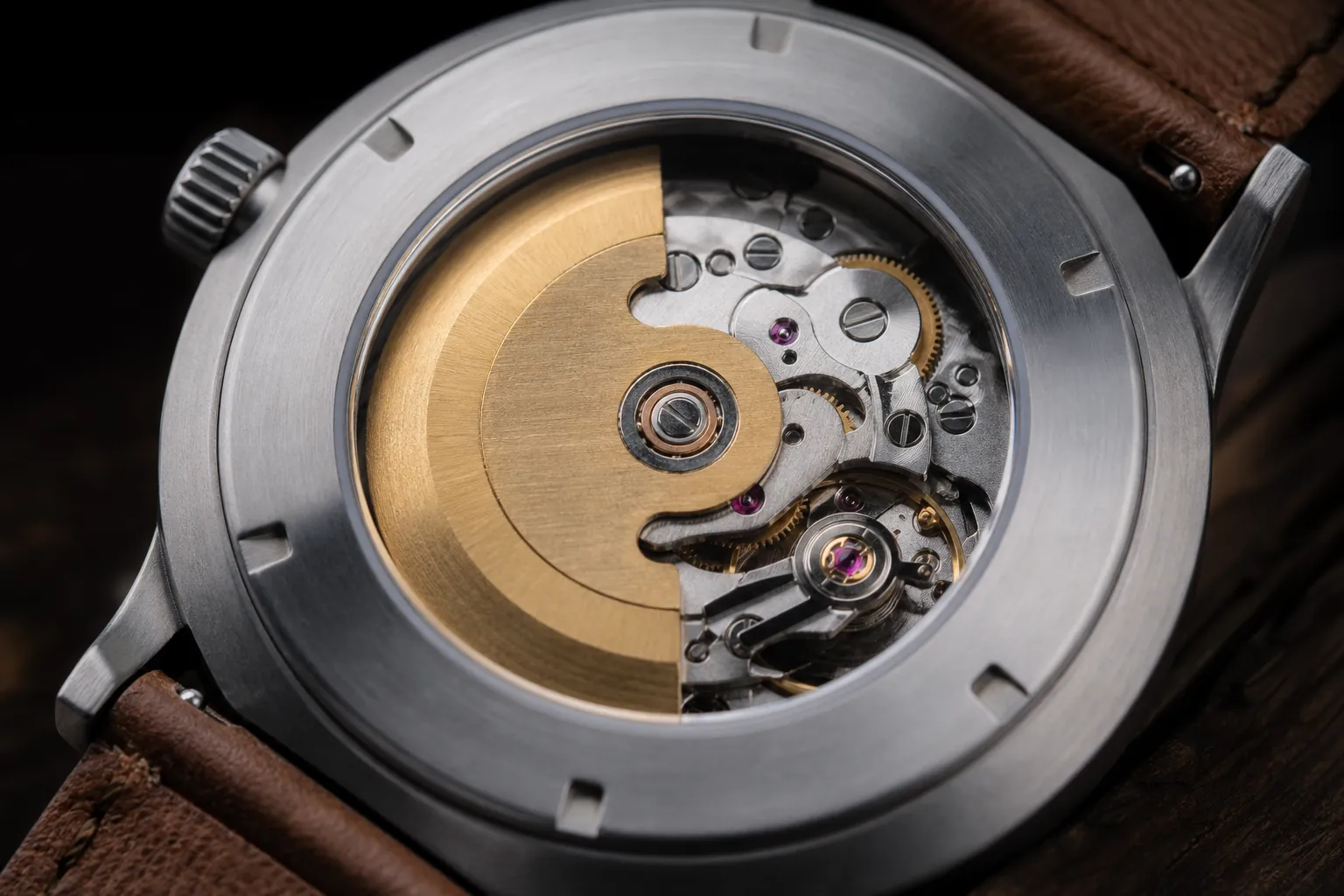
An automatic watch turns the small movements you make every day into stored energy. There is no battery hidden inside a traditional automatic movement. Instead, a moving weight, a wound spring, gears, and a regulating system work together to move the hands. The idea is beautifully straightforward, even if the parts are anything but simple.
The Short Answer
An automatic watch is a self-winding mechanical watch. As your wrist moves, a weighted component called a rotor swings inside the case. That motion is transferred through a winding system to tighten the mainspring. The mainspring then releases its energy in a controlled way, driving the gear train and hands. The Fondation de la Haute Horlogerie’s explanation of self-winding watches describes the same basic idea: the wearer’s movements wind the mainspring through the rotor.
“Automatic” and “mechanical” are related, but not identical terms. A mechanical watch is powered by a spring rather than electronics. An automatic movement is a mechanical movement that can wind itself as you wear it. Some mechanical watches are hand-wound only, so their crown must be turned to build power.
How Wrist Movement Becomes Time
It helps to picture the movement as a small energy path. Your wrist supplies motion, but the watch has to collect that motion, store it, release it gradually, and keep that release steady enough to show useful time. Each part has a clear job.
- Your wrist moves. Walking, reaching for a bag, turning a steering wheel, and ordinary daily motion create small changes in direction.
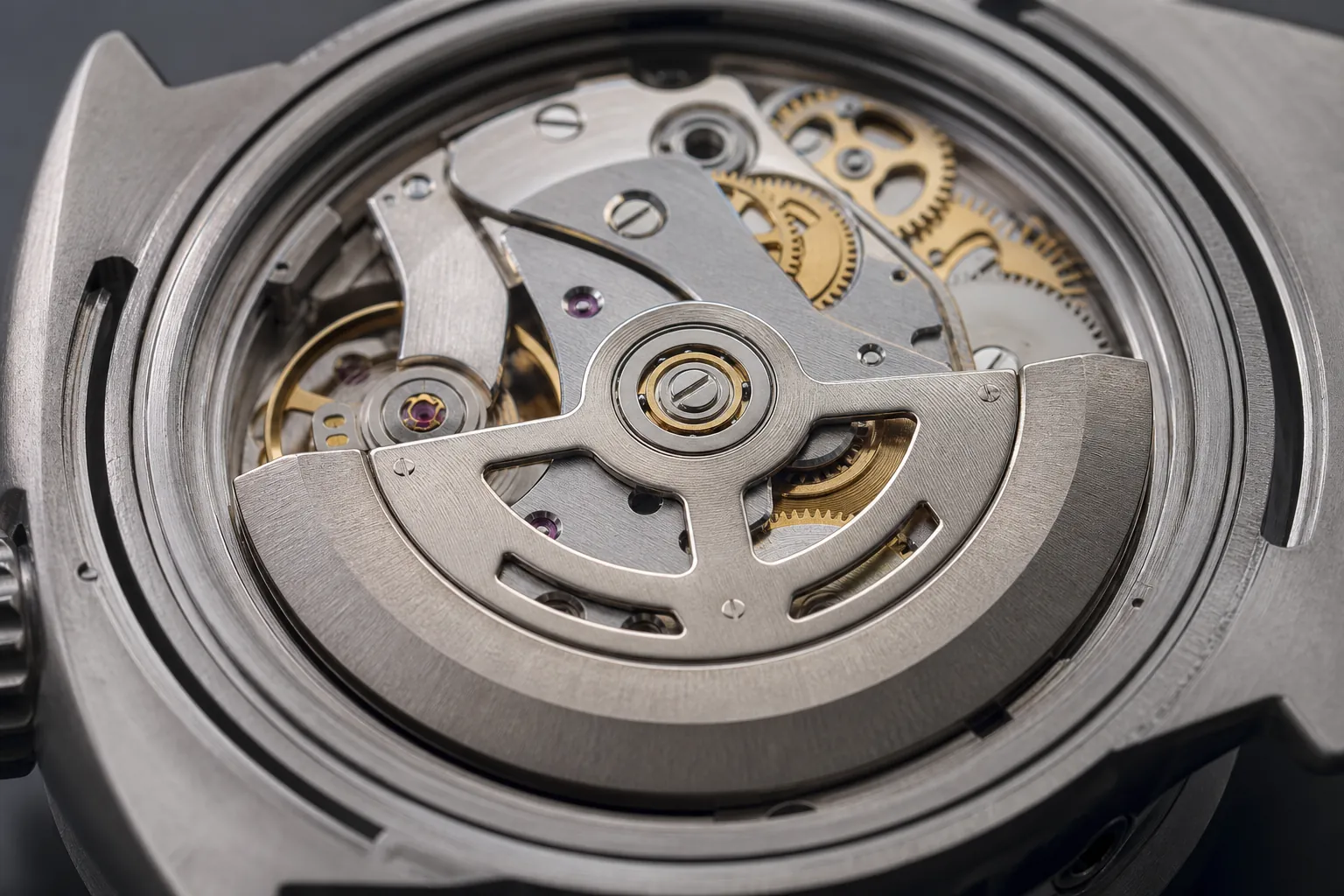
- The rotor swings. The rotor is a semicircular weight that pivots as the watch moves. The Fondation’s rotor reference explains how this weight winds the movement through gears.
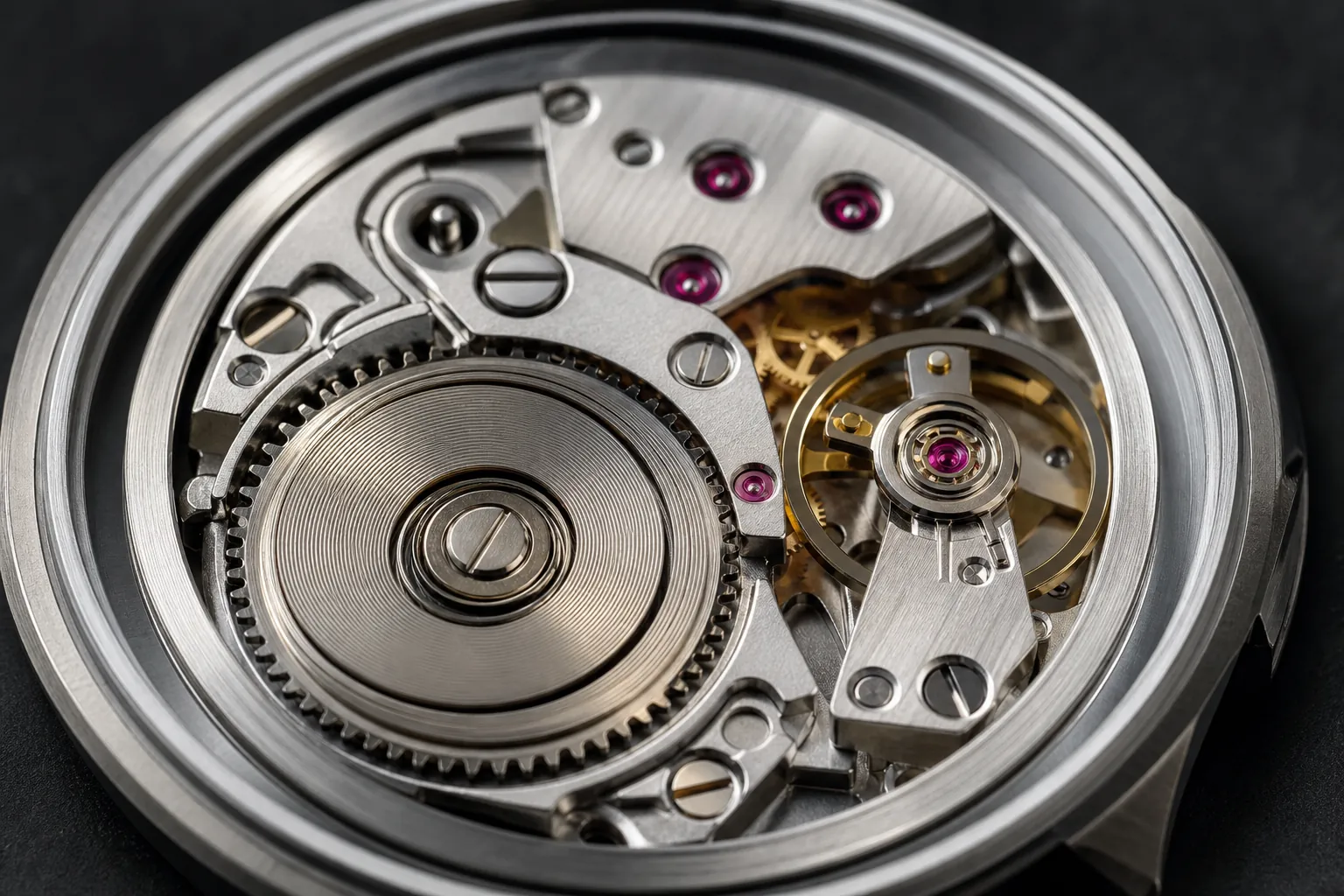
- The mainspring stores energy. The winding system coils a long, thin spring inside a barrel. That spring is the watch’s energy reserve.
- The gear train carries power. As the mainspring unwinds, gears pass energy through the movement and set the different speeds needed for seconds, minutes, and hours.
- The escapement meters release. Without a regulator, the spring would unwind at once. The escapement releases tiny, measured amounts of energy instead.
- The balance keeps the beat. The balance and its spring oscillate back and forth. That rhythm tells the escapement when to release the next bit of power.
The Fondation’s mechanical-watch overview is a useful deeper read on this chain from mainspring to gear train, escapement, and balance. You do not need to memorize the names to enjoy an automatic watch, but knowing the energy path makes the whole thing feel less mysterious.
The Parts Worth Knowing
Most of the movement is hidden, but five parts explain almost everything an owner notices. The rotor is the moving weight. The mainspring holds energy. The barrel houses that spring. The escapement releases energy in measured beats. The balance wheel and balance spring set the movement’s rhythm.
These parts are why an automatic watch feels different from a digital tool. You may hear a soft rotor movement, feel a little resistance while winding the crown, or see the seconds hand move in small steps instead of once per second. None of that is theater. It is the physical work of the movement.
Do Automatic Watches Need Batteries?
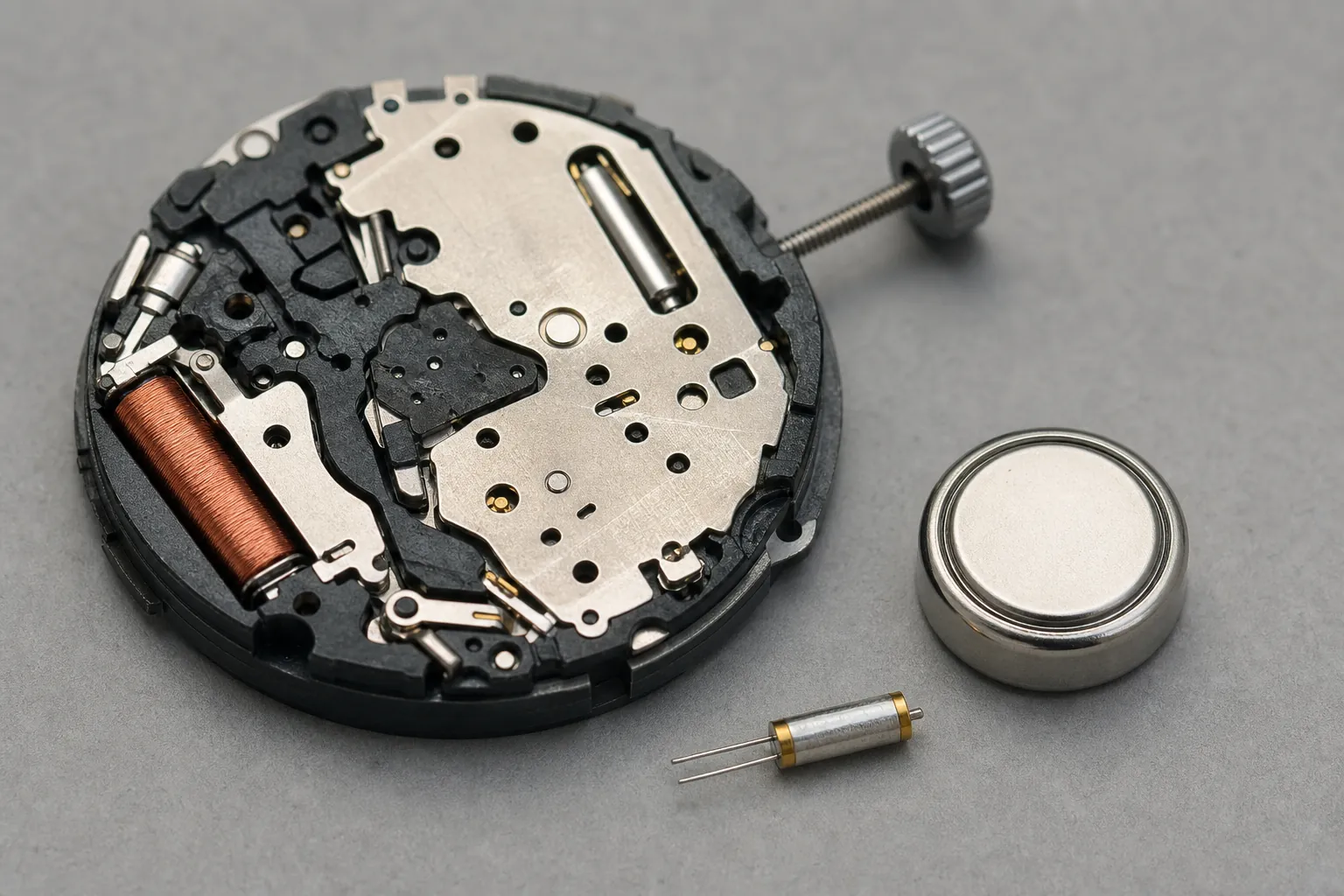
No. A traditional automatic watch does not need a battery because its mainspring supplies the energy. That does not make it better or worse than every other type of watch. It simply gives you a different experience. REMI's automatic field watches, for example, use daily movement and a mechanical caliber, while a quartz field watch uses a battery-powered movement.
Quartz watches use a battery to send electricity through a quartz crystal, then use that controlled signal to keep time. They are often a practical choice for someone who wants dependable timekeeping with very little routine. Automatic watches ask a little more from the owner, but they answer with visible craft, a mechanical heartbeat, and a direct connection between wear and power.
Why an Automatic Watch Stops When You Take It Off
An automatic watch does not create endless power. It stores a finite amount in the mainspring, called its power reserve. Once that stored energy runs down, the watch stops. That is normal, not a sign that the movement has failed.
Power reserve is not universal. It depends on the movement, its condition, and how fully it was wound. Some modern movements are designed for long reserves, while others are shorter. Treat the model’s published information and instructions as the best reference, rather than assuming every automatic watch will run for the same number of hours.
For a watch worn regularly, normal wrist movement usually keeps the reserve topped up. For a watch that has spent a few days on a dresser, a quick manual wind and reset may be all it needs. This is one reason some collectors enjoy a rotation: each watch asks for a brief moment of attention when it comes back into service.
Do You Need to Wind an Automatic Watch?
Regular wear does the routine winding, but many automatic movements can also be wound by hand through the crown. This is useful when the watch has stopped, when you have not worn it for a while, or when you want to start the day with the reserve built up. The important part is to follow instructions for the movement in your watch instead of applying one rule to everything.
Several REMI automatic models use the TMI NH35. On its NH series product page, Time Module identifies the movement as an automatic caliber with a date display and stop-seconds function. Its NH35 operating manual says to wind the crown clockwise in its normal position and recommends at least 55 turns to fully wind the mainspring. If your watch uses another movement, use that movement’s instructions instead.
For practical ownership, set the watch down, make sure the crown is in its normal winding position, and turn it gently. Do not force the crown. Once the watch is running, set the time and wear it normally. For model-specific help, REMI’s contact page is the right place to ask before guessing.
Can You Overwind an Automatic Watch?
It is tempting to look for one universal answer, but movements vary. A modern automatic movement is designed to manage routine winding, yet a crown should never be forced. If it feels unusually tight, gritty, or resistant, stop and check the model instructions or ask a watch professional. Careful handling is more useful than testing the limit.
Are Automatic Watches Accurate?
Automatic watches keep time through a mechanical regulating system, not an electronic oscillator. Their rate can be influenced by position, temperature, shocks, magnetism, servicing condition, and the movement’s design. A quartz watch is usually the better choice when absolute day-to-day accuracy is the priority. An automatic watch is the choice when you value the mechanism itself, the ritual of setting it, and the fact that it is powered by your movement.
That is why REMI carries both. Choose quartz for simple grab-and-go use, or explore REMI's automatic field-watch range when you want the experience of a mechanical movement on the wrist.
What an Automatic Watch Asks of You
An automatic watch works best when it is part of your routine. That does not mean it needs constant attention. It means you should expect to set it after a long rest, understand whether it has a date function, and give it normal care instead of treating it like a disposable object. In return, it gives you a movement that becomes more familiar over time: the feel of the crown, the motion of the rotor, and the small ritual of putting it on.
If you rotate several watches, let the one you pick up tell you what it needs. If it is still running, check the time and go. If it has stopped, wind it gently, set it accurately, and check the date only when the movement’s instructions say it is safe. If you wear only one automatic most days, it may need far less intervention. There is no prize for fussing with it. The goal is simply to use it with enough care that the movement can do its job.
Storage is part of that routine too. A dry, stable place away from strong magnets and accidental impacts is better than a crowded drawer. Keep straps clean and let a wet leather strap dry naturally. If a watch starts losing a surprising amount of time, stops despite regular wear, or has a crown that no longer feels normal, it is time to ask for help rather than forcing a fix at home.
Setting and Caring for a REMI Automatic
Start with the information for the exact watch you own. For TMI NH35-powered REMI models, the manufacturer’s manual includes a specific date-setting precaution: avoid changing the date while the watch shows a time between 9:00 p.m. and 4:00 a.m. That is a movement-specific guideline, so do not assume it applies to every watch in the collection.
Beyond that, simple habits go a long way. Keep the crown fully seated after setting the time. Take the watch off before activities that could deliver a hard impact. Use the listed water-resistance rating as a limit, not an invitation to push your luck. And when a watch needs service or you have a care question, the REMI warranty and care information gives the next step.
REMI hand-assembles watches in Florida and also brings carefully restored finds back into regular wear. That mix means the best ownership advice is always specific: a new Monarch Dress, a diver with an NH35 movement, and a pre-owned mechanical watch may each have different details worth respecting.
Why Wear an Automatic Watch?
An automatic watch is not the easiest way to know the time. That is precisely the point. It is a small mechanical object that rewards use. The rotor moves because you move. The mainspring holds that energy. The balance keeps a patient rhythm under the dial. When you put the watch back on after a few days away, you take part in the process again.
For a first automatic, choose a watch you will genuinely want to wear. A practical field style such as the Trekker Field Automatic White makes the ritual easy to build into everyday life. If you are still deciding between automatic and quartz, browse the full REMI collection and choose the movement that best fits how you live.
Common questions
Automatic Watch FAQ
Do automatic watches need batteries?
No. An automatic watch is mechanical. Its hands are powered by energy stored in a mainspring, which is wound by a rotor as you wear it. Quartz watches are the common battery-powered alternative.
What happens when an automatic watch stops?
Its stored power has usually run down after the watch was not worn for a while. That is normal. Wind and set it according to the movement instructions, then regular wear can keep it running.
Do you have to wind an automatic watch by hand?
Regular wrist movement can keep an automatic watch wound, but many automatic movements also allow manual winding through the crown. Check the movement or model instructions before winding.
Are automatic watches more accurate than quartz watches?
Not usually. Mechanical movements are regulated by a balance system, while quartz uses an electronic oscillator. Automatic watches are valued for mechanical character and the relationship between wear and power.
Keep reading
Related Posts

Watch care
How to Clean a Watch Strap Without Damage
A material-by-material care guide for leather, nylon, rubber, and metal bracelets.
Read the guide →
Watch care
How to Wind an Automatic Watch Safely
A careful, model-aware routine for winding a stopped automatic watch, setting the time, and knowing when to stop.
Read the guide →
Watch care
How to Change a Watch Strap at Home
A careful guide to choosing the right fit, swapping a standard strap, and making sure it is secure.
Read the guide →