Watch Guides
How to Use a Dive Watch Bezel: A Simple Guide
Learn how to use a dive watch bezel to track elapsed time, why it turns one way, and how to make the most of it on land.
Back to Watch Guides →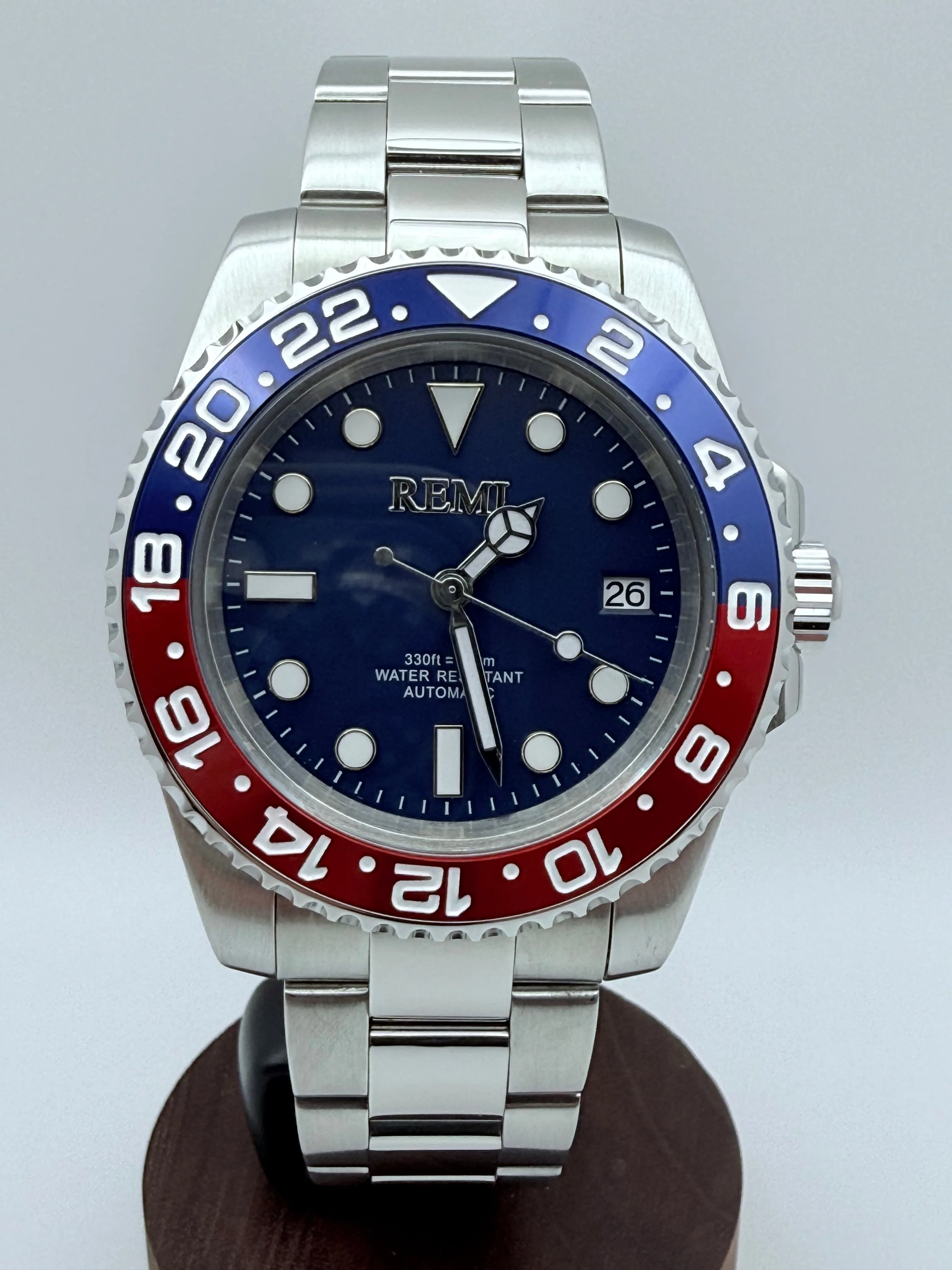
The rotating ring around a dive watch is not just decoration. It is a simple analog timer that stays visible at a glance, needs no battery, and is useful long after you leave the water. Once you know where to line up the triangle, you can time a walk, a steeping tea, a parking session, or any short task without reaching for your phone.
The Short Answer
To use a dive watch bezel, turn its zero marker, usually a triangle with a luminous dot, until it lines up with the minute hand at the moment you begin. As time passes, the minute hand moves around the dial. Read the number on the bezel beneath that hand to see the elapsed minutes. There is nothing to start, stop, or reset. The moving minute hand does the timing, and the rotating bezel gives it a new zero point.
That is the same basic method shown in Seiko’s rotating-bezel instructions and TUDOR’s bezel tutorial. The details of a watch may differ, but a standard 60-minute dive bezel is built to show elapsed time clearly and quickly.
Find the Parts Before You Turn Anything
Look at the outer ring that surrounds the crystal. On a classic dive-style watch, it carries a 60-minute scale and a triangle, dot, or arrow at the 12 o’clock position. That mark is the bezel’s zero. The minute hand is the longer hand that makes one full trip around the dial each hour. Those two reference points are all you need.
Many bezels mark the first 15 or 20 minutes more closely, then use five-minute numerals or hash marks for the rest of the hour. The important part for everyday timing is that the scale starts at zero and goes to 60. Do not confuse it with a fixed tachymeter scale, a 24-hour GMT bezel, or a decorative outer ring. A dive bezel turns by hand and is meant to be read against the minute hand.
Before a first try, look for the zero triangle and gently see which direction the bezel moves. A true unidirectional dive bezel should move counterclockwise only. Never force it clockwise. If the watch has a screw-down crown, make sure that crown is fully secured before you use the watch around water.
How to Track Elapsed Time in Three Steps
Use this simple routine for any interval under an hour. It is worth practicing with something low-stakes, such as a cup of tea, because the logic becomes obvious once you see the hand move against the bezel.
- Set the zero marker. At the start of the event, rotate the bezel counterclockwise until its triangle or pip sits directly above the minute hand.
- Let the minute hand travel. Leave the bezel where it is. The watch continues telling ordinary time as usual, while the minute hand now moves across the bezel’s elapsed-time scale.
- Read the minutes. When you check the watch, find the bezel number or minute mark beneath the minute hand. That is how many minutes have passed since you aligned the zero marker.
Imagine you begin at 10:10. The minute hand is on the 10-minute mark, so you rotate the bezel’s zero triangle to that position. At 10:30, the minute hand points to the 20-minute mark on the bezel. Twenty minutes have elapsed. You do not need to remember the starting clock time or subtract anything in your head.
A little imprecision is normal. A mechanical watch’s minute hand may not sit exactly on a hash mark, and individual bezels can have different click counts. For cooking, breaks, or errands, reading the nearest minute is usually enough. If the timing needs to be exact, audible, recorded, or safely monitored, use a dedicated timer instead.
Why a Dive Bezel Turns Only One Way
The one-way rotation is a safety feature. A diver uses elapsed time as part of a wider plan that includes depth, air supply, and proper dive equipment. If a bezel could be knocked in either direction, it might make the elapsed time appear shorter than it truly was. A counterclockwise-only bezel is designed so an accidental shift can only make the elapsed time read longer. That is the more cautious mistake.
Both Seiko and TUDOR describe this logic in their official instructions. The current ISO 6425 divers’ watch standard applies to watches designed for depths of at least 100 meters and calls for a secured timing system visible in darkness. A rotating bezel is one familiar way a diving watch can meet that need, but a rotating bezel alone does not certify a watch for diving or replace a dive computer, training, or a check of your equipment.
That distinction matters. A dive-style watch can be an excellent everyday companion even if its owner never dives. A watch intended for actual underwater use deserves closer attention to its stated rating, maintenance, seals, crown position, and the manufacturer’s instructions. The bezel is helpful, but it is only one part of the picture.
Use It for Everyday Timing
The bezel is most useful when you want to keep an interval in view without a notification or screen. It is quiet, immediate, and easy to read with a quick glance. It works best for tasks where an approximate elapsed time is enough.
- Cooking: Set the triangle to the minute hand when pasta, tea, or a pan goes on the heat. Check the elapsed minutes while your hands are busy.
- Walking or exercise: Mark the beginning of a warm-up, a lap, or a rest period without turning a workout into a phone task.
- Parking and errands: Use it as a visual reminder of how long you have been away from the car or a stop on your route.
- Breaks and focused work: Give yourself a visible 20- or 30-minute block and check progress without opening another app.
- Travel: Track a short connection, a boarding window, or the time since you set off, while keeping your phone in your pocket.
Do not use a bezel as your only reminder for a medical dose, an appointment, a flight cutoff, or anything where forgetting has serious consequences. The strongest use is simple: a convenient reference you can see on your wrist, not a substitute for an alert you need to hear.
How to Set a Countdown
A standard dive bezel is naturally an elapsed-time timer, but it can also give you a quiet countdown. Say you need 20 minutes. Find the 20-minute mark on the bezel and rotate that mark to the minute hand at the beginning. As the minute hand travels, it moves toward the zero triangle. When it reaches the triangle, the 20 minutes are complete.
This takes one extra moment of thought because you set the duration, not the zero, against the minute hand. Try it once with a short five-minute interval before relying on it. The method is especially handy when you want a visual check without a sound, but it still has the same limitation as elapsed timing: it will not call your attention back if you stop looking at your wrist.
Do Not Confuse a Dive Bezel With Other Scales
Watch bezels can look similar while doing very different jobs. A GMT bezel usually carries a 24-hour scale and works with an extra GMT hand to show another time zone. A tachymeter is typically fixed in place and helps calculate speed over a known distance. A slide-rule bezel uses two scales and is meant for calculation. None of those is read in the same simple way as a 60-minute elapsed-time dive bezel.
If the outer ring turns both ways, it can still be useful, but it does not have the same fail-safe purpose as a unidirectional dive bezel. If it does not turn at all, treat the markings as a reference scale rather than a timer. Knowing which bezel you have keeps a good-looking feature from becoming a confusing one. When in doubt, look at the product listing or the watch manual before using an unfamiliar scale.
Care for the Bezel Without Forcing It
A bezel should feel positive and controlled, whether it turns smoothly or clicks through set positions. It should not need brute force. If the watch has been in salt water, follow the maker’s care instructions. For a watch whose water resistance is confirmed and whose crown is secured, a fresh-water rinse can help remove salt residue. Do not soak or rinse a watch when you are unsure of its rating, damaged seals, or crown position.
Never pry a bezel up with a knife, push a stuck bezel harder, or add oils and sprays around the crystal. Those shortcuts can damage the bezel insert, click spring, gasket, or case finish. If the bezel is suddenly loose, gritty, misaligned, or unusually stiff after a knock, put the watch aside and ask a watchmaker to inspect it. That is especially important for a pre-owned or restored piece, where service history may matter as much as the outward condition.
How REMI Helps You Put the Bezel to Work
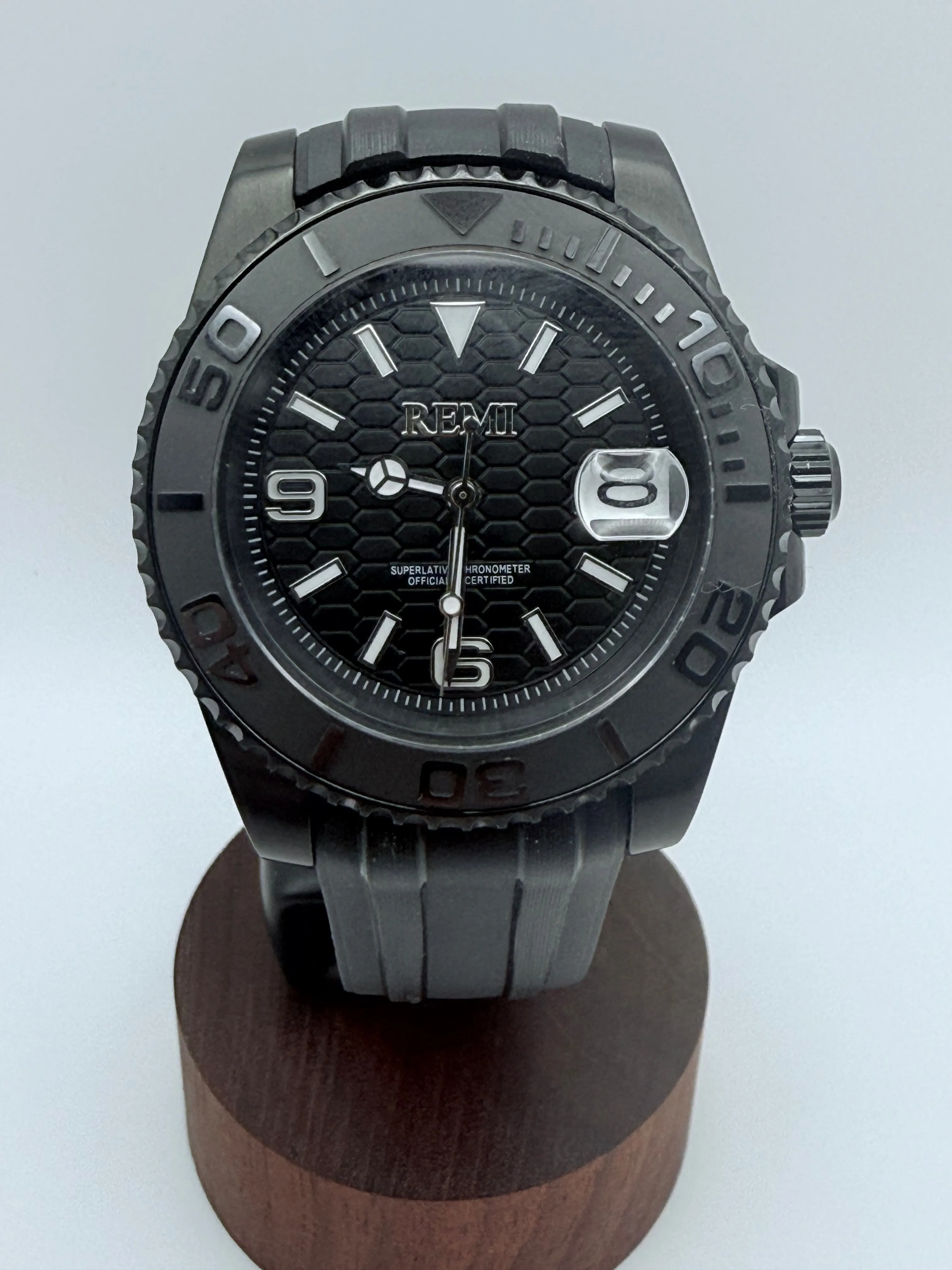
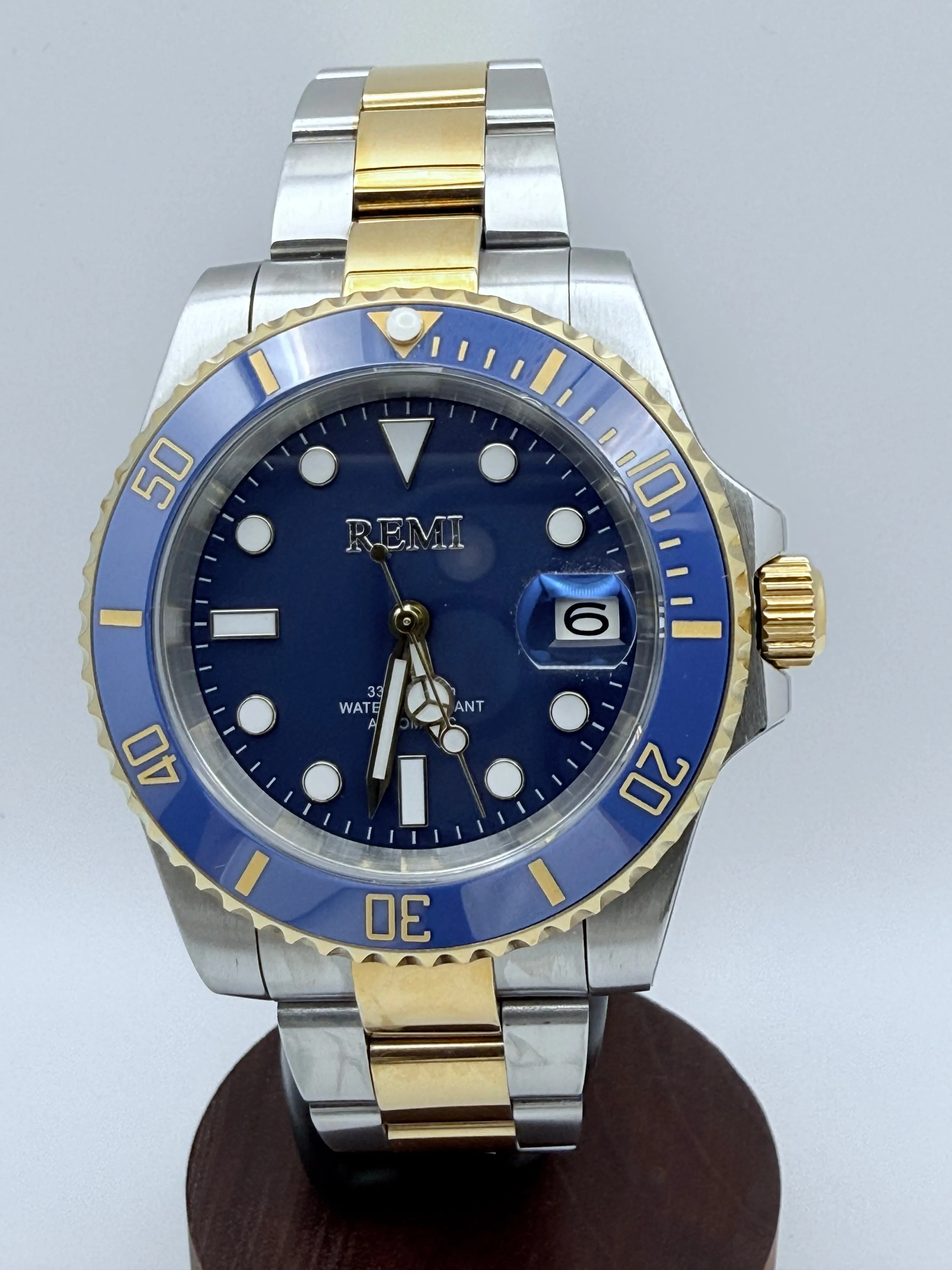
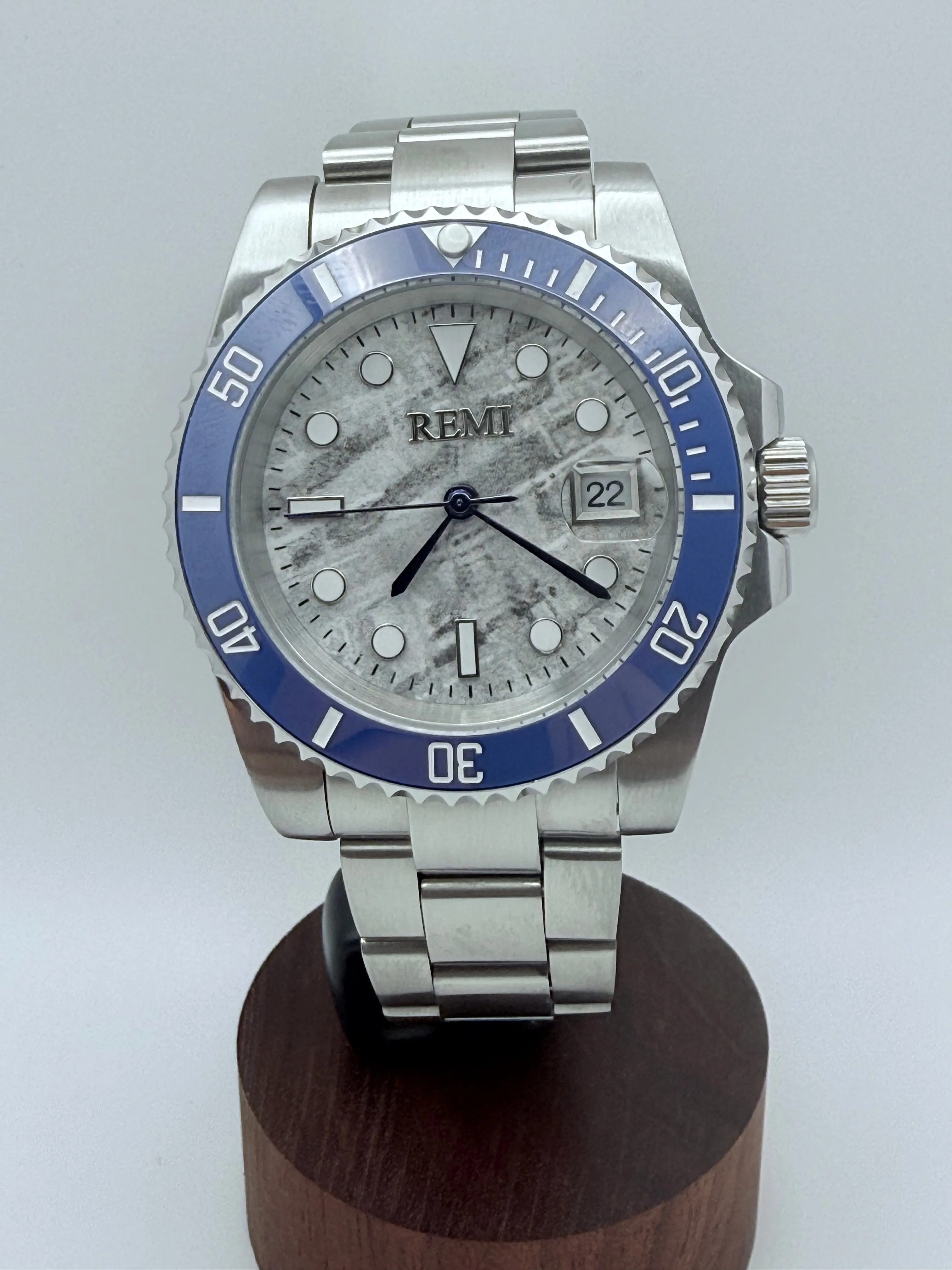
The REMI dive watch collection brings the bold, legible look of a timing bezel to everyday wear. An Atlantis Diver gives you a clear minute scale, prominent hands, and a sport-ready profile, while each individual watch listing is the place to check the current details for the exact model you are considering.
A bezel is only one part of an easy-to-read watch. The guide to watch lume explains how luminous hands and markers help after the light drops, and the guide to how a watch should fit can help you choose a case and bracelet that stay comfortable through an active day. Choose a watch you enjoy wearing first, then make its useful details part of your routine.
A Quick Bezel Checklist
- Find the triangle or luminous pip at the bezel’s zero mark.
- At the start, align that zero mark with the minute hand.
- Read elapsed minutes where the minute hand meets the bezel scale.
- For a countdown, align the target minute mark with the minute hand instead.
- Never force a one-way bezel in the wrong direction.
- Use proper diving equipment and guidance for a real dive.
- Have a gritty, loose, or stuck bezel checked instead of prying at it.
The best way to understand a dive bezel is to use it for an ordinary moment. Set it when you start your next coffee, dog walk, or quick task. After one or two tries, the ring around the dial stops being mysterious. It becomes a small, useful timer that has been in plain sight all along.
Common Questions
Dive Watch Bezel FAQ
How do you use a dive watch bezel?
At the moment you want to start timing, turn the triangle or luminous pip at the top of the bezel until it lines up with the minute hand. Later, the number on the bezel under the minute hand is the number of minutes that have passed.
Why does a dive bezel turn only counterclockwise?
A proper dive bezel is designed so an accidental bump can make elapsed time appear longer, never shorter. For a diver, that is the cautious outcome. It is one feature of a watch designed for diving, not proof by itself that any rotating-bezel watch is suitable for a dive.
Can I use a dive bezel as a countdown timer?
Yes. For a 20-minute countdown, turn the 20-minute mark to the minute hand when you begin. When the minute hand reaches the zero triangle, the 20 minutes are up. Check the direction your bezel turns before setting it, and use a phone or dedicated timer when a missed deadline would matter.
What should I do if my bezel is hard to turn?
Do not force or pry it. After swimming in salt water, rinse the watch in fresh water only if its water resistance and crown position make that appropriate, then gently work the bezel. If it stays gritty, loose, or unusually stiff, have a watchmaker inspect it.
Keep Reading
Related Posts
Watch Basics
What Is Watch Lume?
Understand how modern luminous material makes a dial easier to read after dark.
Read the guide →
Watch Fit
How Should a Watch Fit?
Learn where a watch should sit and how snug it should feel every day.
Read the guide →
Chronograph Basics
How to Set a Chronograph Watch
Learn what the hands and pushers do, and use the stopwatch with confidence.
Read the guide →